
A road trip car checklist usually treats every journey the same. The same list of tires, fluids, brakes and lights goes to a driver on an interstate corridor with services at every few exits and to a driver about to climb a mountain pass with a full car. Those checks matter. They do not say which ones deserve more attention for the road you chose.
This guide covers the checks every trip needs, then adds the Route-Matched Check, a Miles & Mapped planning framework for deciding where to look harder. Road conditions are a separate check, covered in how to check road conditions. For the wider trip, start with how to plan a road trip.
The Checks Every Road Trip Needs
| Check | What to Look At | Controlling Reference |
|---|---|---|
| Tires | Pressure, cuts, bulges, cracks, uneven wear, tread, age | Tire and Loading Information Label, owner’s manual, NHTSA |
| Fluids | Engine oil, coolant, brake fluid, washer fluid, others the manual lists | Owner’s manual |
| Brakes | Noises, pedal feel, vibration, warning lights | Owner’s manual, a professional inspection |
| Battery | General condition, starting behavior, warning lights | Owner’s manual, a mechanic |
| Lights and visibility | Headlights, brake lights, turn signals, hazards, windshield, wipers, washer | Owner’s manual |
Tires come first. NHTSA says to check the pressure of every tire, including the spare, at least once a month when the tires are cold, meaning the car has not been driven for at least three hours. The correct pressure is on the Tire and Loading Information Label on the driver’s door edge or post, or in the owner’s manual. The number molded into the tire itself is not the recommended pressure. A tire pressure warning light only comes on when a tire is significantly underinflated, so NHTSA says it does not replace a gauge.
For tread, NHTSA says tires are not safe and should be replaced when the tread wears to 2/32 of an inch, and it describes a penny test: set Lincoln’s head upside down in the groove, and if you can see the top of his head, replace the tire. That figure marks a worn-out tire. A tire close to it has less tread to work with on wet or icy roads. Look at the sidewalls too, and check for uneven wear.
Fluids and brakes depend on your vehicle. Use the fluids and levels in the owner’s manual, not a general rule, and have a professional add or replace anything you are unsure about. Do not open a hot cooling system. Arizona DOT warns never to remove the radiator cap while the engine is hot. For brakes, a change in noise, pedal feel or vibration, or a warning light, is a reason for a professional to look, not a reason to guess at the cause.
The battery shows up in both extremes. NWS names it among the systems most affected when temperatures drop, and Arizona DOT lists testing it before summer heat. This guide gives no age at which a battery fails, because the manual and a mechanic’s test say more than a number would. For lights and visibility, walk around the car with the headlights, brake lights, turn signals and hazards on, then look at the windshield, wiper blades and washer system. Weather and low light make visibility more important on a long drive.
The owner’s manual controls the rest: tire pressure, approved fluids, the maintenance schedule, the spare and tire equipment, warning systems, towing limits and any electric vehicle procedures. This checklist does not replace it.

Road Trip Car Check for Recalls Early
NHTSA’s recall page lets you search by VIN or license plate. The VIN is the 17-character number on the lower left of the windshield, and it also appears on the registration card. The search tells you whether the vehicle has an unrepaired recall from a participating manufacturer. If there is none, it says “0 unrepaired recalls associated with this VIN.”
The lookup has limits, and NHTSA lists them. It does not show recalls that have already been repaired. It may miss recently announced recalls where not every VIN has been identified yet. It does not show safety recalls more than 15 years old, unless the manufacturer offers more coverage. It also leaves out recalls by small manufacturers, non-safety campaigns and international vehicles. A clean result is useful but not a full history.
If a recall is open, NHTSA says to follow any interim safety guidance the manufacturer gives and contact a dealer, since the repair is free. Follow a notice’s instructions exactly, because the guidance differs from one recall to the next.
Check early. A repair can need an appointment or time to get parts, and a day-before check leaves no room for either. NHTSA suggests registering your vehicle, tires, car seats and equipment and checking recalls twice a year. Its free SaferCar app for iOS and Android sends an alert when it finds a recall for items you saved. The website remains the main tool.
Tires and the Spare-Tire Question
Not every vehicle carries the same tire equipment. Some have a full-size spare. Some have a temporary spare. Some have a sealant and inflator kit instead of a spare, and some have run-flat tires. Ford’s owner support, for example, describes a kit that provides a temporary repair instead of a spare tire, holds enough sealant for one repair and points drivers to the owner’s manual for speed and distance limits. Find out which your vehicle has before you leave.
Then check the equipment, not only its presence:
- If there is a spare, check its pressure. NHTSA includes the spare in its monthly check.
- Confirm the jack and tools are there and you know how to use them.
- If there is a repair kit, read the manual’s instructions and any condition or expiration notes for it.
- Do not assume sealant fixes every damaged tire. Severe damage may mean a tow, which is where the service gap matters.
Tires and spares age. NHTSA says some vehicle and tire manufacturers recommend replacing tires six to 10 years old regardless of tread, and that the last four digits of the DOT tire identification number give the week and year of manufacture. Spares seldom get replaced, so they age too. NHTSA also says a full-size spare should not stand in for worn tires except in an emergency.
A temporary spare has limits. The spare’s label and the manual give them, so this guide does not. Treat it as a way to reach a repair shop.

Match the Vehicle Check to the Route
The Route-Matched Check is a Miles & Mapped planning framework, not an industry metric, an official inspection system or a mechanical certification. The idea is simple. The farther you are from dependable help, and the more the road demands of the vehicle, the more carefully you should look at the systems that road tests. It connects to the service gap in our guide to fuel, charging and food stops: the same problem is harder to manage when the next dependable service is far away.
It sets priorities. It does not replace the owner’s manual, scheduled maintenance or a professional inspection, and the rows below are not separate mandatory standards.
| Route Character | Additional Checks to Consider | Why It Matters | Guidance |
|---|---|---|---|
| Mountain roads and high elevation | Brakes, cooling system, tires, vehicle load, transmission behavior on grades | Long climbs and descents work these systems harder | Owner’s manual. Kia and Mazda manuals, for example, advise shifting to a lower gear on long descents instead of riding the brakes |
| Desert heat | Coolant level and condition, belts and hoses, tires, A/C, battery | NHTSA says rubber belts and hoses degrade as temperatures rise, and that sustained heat can deteriorate tires | NHTSA Summer Driving Tips, Arizona DOT, owner’s manual |
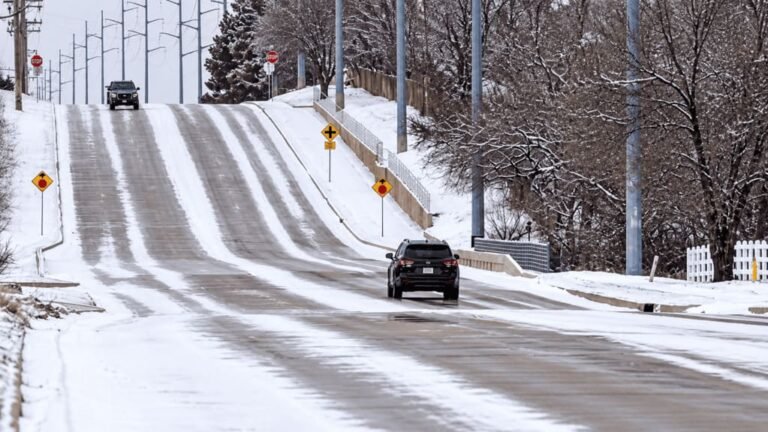
| Winter roads | Battery, tire type, washer fluid, wipers, defroster, coolant | NWS lists the battery, wipers, coolant and tires among the systems most affected by cold | NWS, NHTSA, owner’s manual |
| Low-service rural roads | Spare or repair kit, jack and tools, spare pressure, tire condition, whether service is due | A small failure costs more when help is far away | NHTSA tire guidance, owner’s manual |
| Towing and RV travel | Tow vehicle condition, trailer tires and lights, hitch, trailer brakes, load against stated limits | Towing adds equipment and load that a normal check skips | Owner’s manual, trailer maker |
| Electric vehicles | Tires, warning messages, charging cable and adapters, charging requirements | The engine-fluid checks may not apply, but tires and system warnings still do | Owner’s manual |
Use the table as a prompt. Find the row that matches your route, and read two when the trip mixes them. A desert drive on low-service roads, for example, combines the heat row with the spare-and-tools row, and the second one often decides how a small tire problem ends.
A few notes on the rows. On mountains, no single procedure fits every vehicle, so read your manual’s section on steep grades. Our Beartooth Highway guide shows what a high route can ask of a car. For desert routes, timing matters as much as the car; see desert road trip timing. A weak air conditioner does not by itself make a vehicle unsafe, but heat is the reason to test it.
For winter, NHTSA’s tire guidance says all-season tires have some mud and snow capability, winter tires work better in deep snow, and summer tires are not designed for freezing temperatures. All-season tires are not a fit for every winter road. See winter road trip planning for the route side.
Towing changes the inspection but the RV road trip planning guide owns the detail, and the EV road trip guide owns charging and range.
When to Do the Check
Some checks need lead time and some do not.
Several weeks before departure:
- Check for recalls.
- Review the maintenance schedule and book any service that is due.
- Look into unusual noises, warning lights or changes in how the car drives.
- Inspect tires and confirm the spare or repair kit is present.
A few days before:
- Recheck tire pressure when the tires are cold, and look for damage.
- Check fluid levels the manual’s way.
- Test lights and wipers.
- Confirm any equipment you need fits your vehicle.
The day before, do a final visual walk-around. Look for new warning lights, new leaks or new symptoms, and make sure the equipment you need is easy to reach. A quick check does not replace scheduled maintenance or a professional repair.
When to Take the Vehicle to a Mechanic
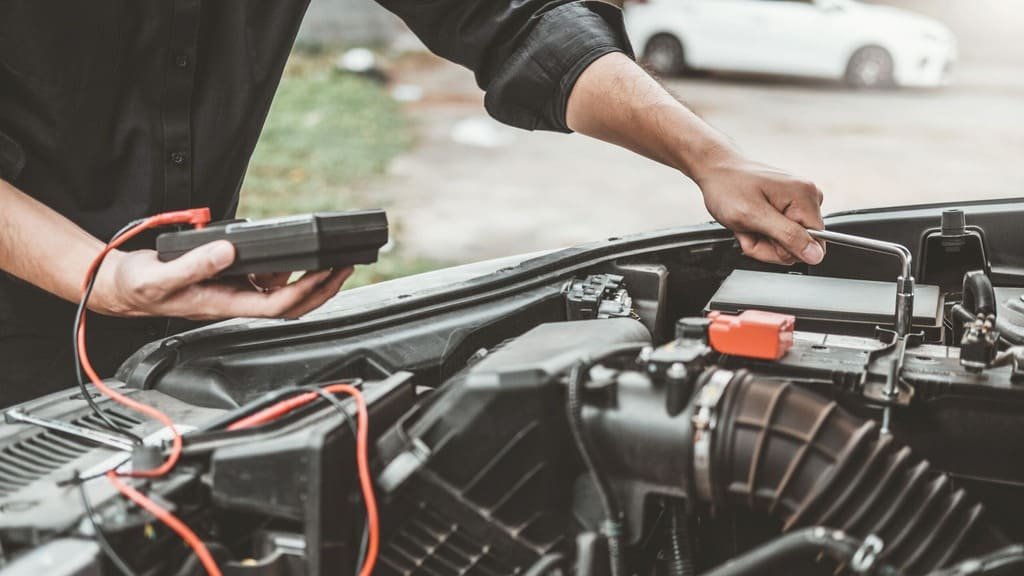
Some checks are visual. Others need a professional. Arrange an inspection for any of these:
- A brake warning light, or braking that feels different
- Tire damage or wear that worries you
- A warning light that stays on
- A fluid leak
- Overheating
- A battery or charging system warning
- Unusual noises or vibration
- Service that is due
- Doubt about the spare, repair kit or towing equipment
A warning light that goes away has not fixed the problem. Fix safety-related problems before a long trip. This does not mean every car needs a shop visit before every trip. It means unresolved symptoms, due maintenance and real uncertainty do.
If Something Goes Wrong on the Road
Pre-trip checks lower the odds of a breakdown. They do not remove them. If it happens, move to a safe spot if you can. Make the vehicle visible with hazard lights and any warning equipment you carry. Work out which road authority or roadside provider covers your location, and remember that roadside coverage may have limits on remote roads and inside national parks. This guide covers preparation, not the full response.
The Emergency Kit: Carry What Your Route Requires
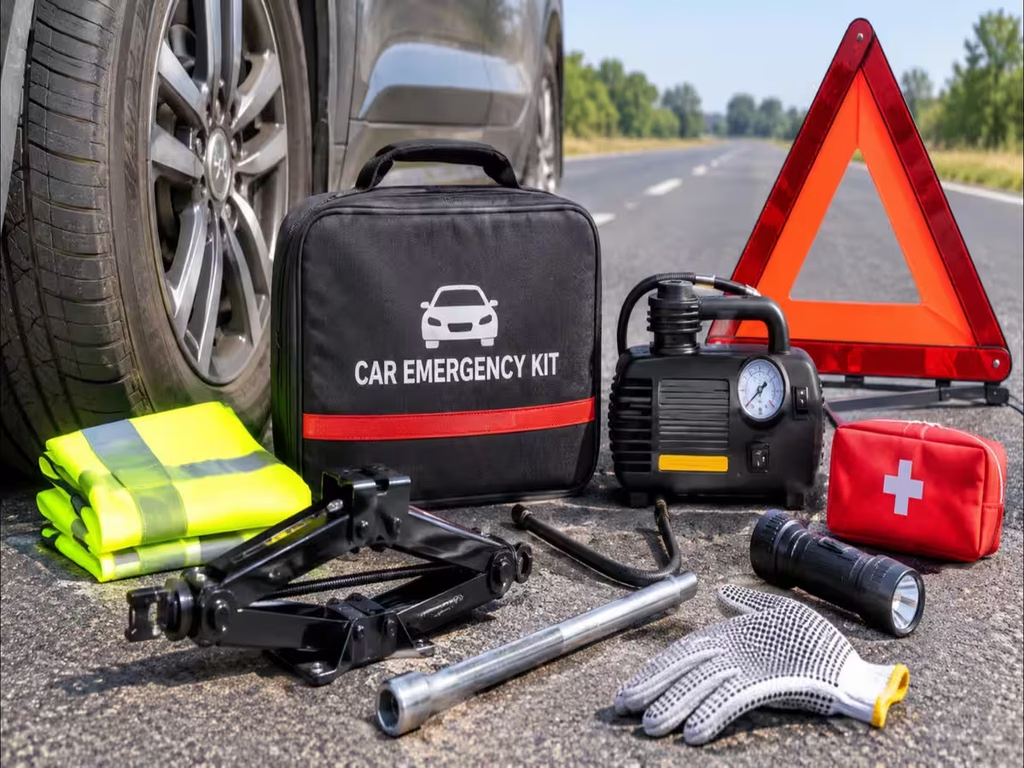
Know what emergency equipment your vehicle already holds and what you may need to add. The categories are warning and visibility gear, basic tools suited to your vehicle, tire repair or spare equipment, first-aid supplies, weather-appropriate supplies and any charging or recovery equipment your vehicle needs. The full list belongs in the road trip packing list. Let the route, season, vehicle and service availability shape what you add.
Common Road Trip Vehicle-Check Mistakes
- Using the maximum pressure printed on the tire instead of the vehicle’s recommendation
- Assuming every car carries a spare
- Checking recalls only on the day of departure
- Ignoring noises or warning lights
- Treating a quick visual check as maintenance
- Using the same priorities for every route
- Assuming roadside help can reach every remote road
Frequently Asked Questions
What Should I Check on My Car Before a Road Trip?
Tires, including the spare, come first, then fluids, brakes, the battery, lights and wipers, and open recalls. Use your owner’s manual for specifics, then add what the route calls for.
How Early Should I Prepare My Car for a Road Trip?
Start weeks ahead for recalls, due maintenance and anything that needs a repair appointment. Save pressure, fluid and light checks for the days just before you leave.
Should I Check My Car’s Recalls Before Traveling?
Yes. Use the NHTSA VIN lookup, and remember it does not show repaired recalls, some very new ones, those older than 15 years unless the manufacturer offers more coverage, or recalls from small manufacturers.
How Do I Know Whether My Spare Tire Is Ready?
Confirm you have one, check its pressure, check its age and make sure the jack and tools are with it. If your vehicle has a repair kit instead, read the manual’s instructions and limits.
Does an Electric Vehicle Need a Pre-Road-Trip Inspection?
Yes. Tires, warning messages and charging equipment still matter. The owner’s manual says which checks apply to your model.
Should I Have My Car Serviced Before a Long Road Trip?
If service is due, or you have unresolved symptoms or warning lights, yes. Follow the manufacturer’s schedule and ask a professional if you are unsure.
Plan the Route Around the Car
PLAN YOUR TRIP YOUR WAY
Build a day-by-day itinerary around your time, pace, interests, and budget.
Run the Route-Matched Check before you leave, then plan the trip around your vehicle, the route and the services along it. The Miles & Mapped Trip Planner helps with route planning. It does not inspect vehicles, check for recalls or diagnose faults, so use NHTSA and your owner’s manual for those.