An EV road trip isn’t a gas-car road trip with charging stops swapped in for gas stations. The route itself changes how you need to plan. A coastal highway with a town every few miles is a fundamentally different planning problem than a remote desert loop where the next charger might be well out of your way. Miles aren’t hours, and for an EV, miles aren’t range either — charging time isn’t just stopping time, and the buffer you need changes with the road you’re actually driving.
Charging confidence comes from planning redundancy, not from knowing exactly where your car will be at a specific minute. You need to know where the primary charger is, what the backup is if it’s unavailable, roughly how much range you’ll have when you arrive, and whether that charger actually works with your vehicle.
EV Road Trip Planning: At a Glance
| Planning factor | Practical approach |
|---|---|
| Charging | Plan around reliable fast-charging locations, not just the nearest one |
| Arrival buffer | Increase it on remote routes, relax it on town-dense ones |
| Charger redundancy | Always know the next viable alternative |
| Charge level | Don’t treat 0% as your planning target |
| Charging time | Plan around your vehicle’s real charging curve, not a charger’s advertised maximum |
| Weather | Adjust your expected range for heat and cold |
| Terrain | Account for elevation and route profile, not just distance |
Route-Planning Apps and Tools
A Better Route Planner (ABRP) is useful for EV-specific route modeling that accounts for your vehicle and consumption. PlugShare is useful for station discovery and real user reports on whether a charger is actually working. Many vehicles now integrate battery state and charging stops directly into their own navigation systems. And you’ll want the charging-network apps themselves — for station status, payment, and authentication, since coverage and reliability vary by network. Use more than one source when a charging stop really matters: a route planner tells you where a charger should be, but the network app and recent user reports tell you whether it’s actually useful right now.
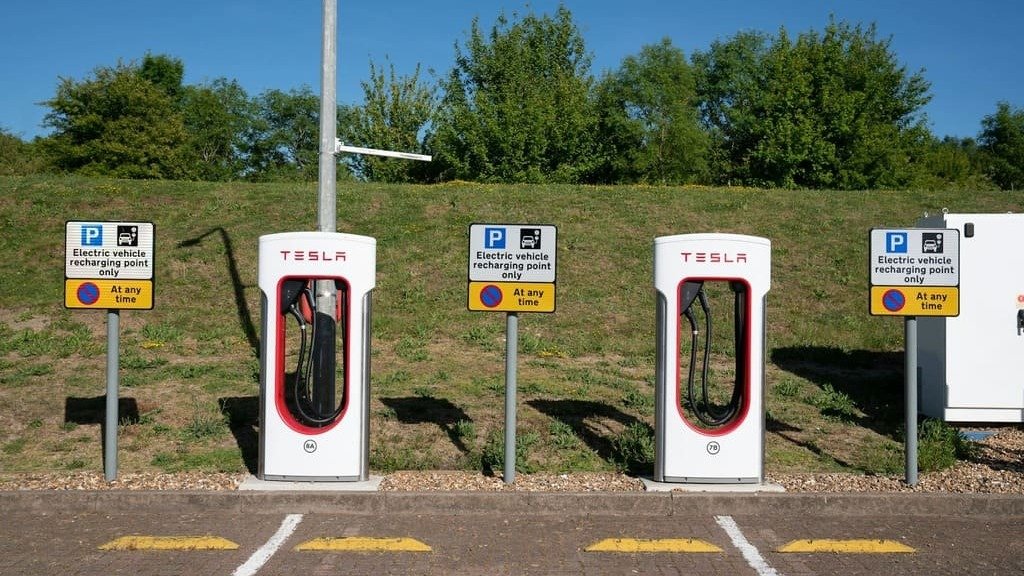
Before you rely on any charger, verify connector compatibility, DC fast-charging capability, network access, and whether you’ll need an adapter — these are three separate questions, and it’s easy to assume one answers the others.
How Route Character Changes EV Charging
Coastal and Town-Dense Routes
Routes like the Pacific Coast Highway or the Oregon Coast pass through frequent towns, which means more charging alternatives and easier recovery if one station is down or occupied. Planning approach: flexibility and convenience matter more than conservative buffers here.
Remote Desert Routes
Routes like Utah’s Mighty 5 or a Death Valley itinerary involve long distances between services, fewer charging alternatives, real heat, and in places, limited cell coverage. Planning approach: conservative range planning and genuine redundancy — see our desert road trip timing guide for how heat itself affects a trip through this kind of terrain.
Mountain Routes
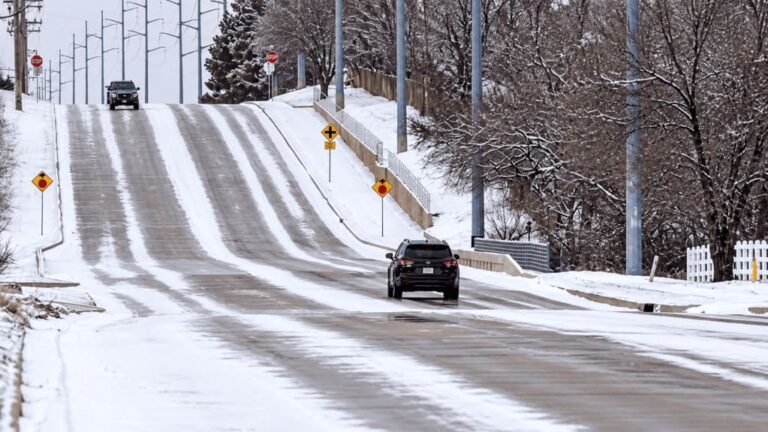
Elevation gain, temperature swings, and weather variability all matter here, sometimes as much as the mileage itself. Sustained climbing increases energy consumption, while descending can recover some of that energy through regenerative braking — the net effect depends on your specific route, vehicle, temperature, and driving conditions, so don’t assume a mountain route is simply worse for range than a flat one of the same distance.
Urban and Interstate Routes
Higher charger density and multiple networks make availability less of a constraint here than traffic and charging queues, especially around busy travel periods.
What Changes Real-World EV Range?
Your vehicle’s EPA range is a starting reference, not a planning guarantee. Several real-world factors shift it in either direction:
Temperature — both extreme heat and cold can affect efficiency and how the vehicle manages its battery.
Speed — sustained high-speed highway driving generally consumes more energy than slower, mixed driving.
Elevation — climbing consumes energy; descending can recover some of it through regenerative braking, with the net effect depending on the specific route and vehicle.
Wind — a real headwind can meaningfully increase aerodynamic drag and consumption.
HVAC use — heating and cooling the cabin both draw power.
Payload — passengers, luggage, and cargo all add weight.
Driving style — acceleration habits and how you use regenerative braking both matter.
Efficiency varies considerably by vehicle, battery size, drivetrain, tires, and conditions, so plan using your own vehicle’s real-world consumption where you can, rather than the EPA number alone.
Understanding EV Charging Speed
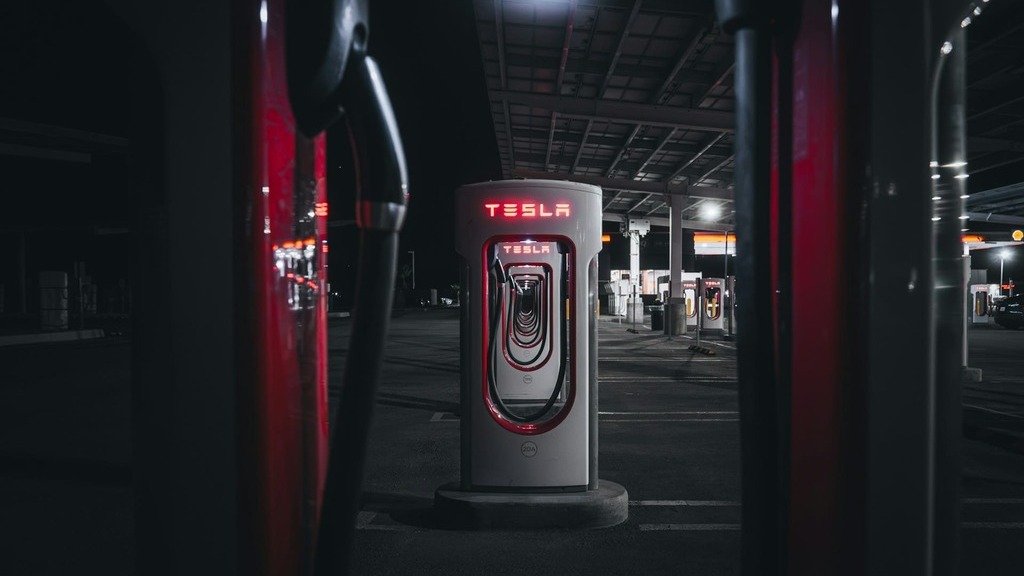
“EVs take 30 to 45 minutes to charge” is too broad to plan around. A charger’s advertised maximum power isn’t necessarily what your vehicle actually receives — that depends on your vehicle’s own maximum DC charging rate, the charger’s real output, your battery’s temperature and current charge level, and whether the station is sharing power with another vehicle at the same time. Charging also isn’t linear: going from 10% to 80% is typically much faster than the last stretch from 80% to 100%, since charging speed tapers as the battery fills. That’s part of why road-trip charging is usually about getting enough energy for the next practical leg, not maximizing every session to full.
Building a Route-Specific Charging Buffer
Rather than one fixed number, your buffer should flex with the route. A town-dense coastal drive can run a tighter buffer, since a backup charger is rarely far away. A remote desert or mountain route deserves a larger one, given fewer alternatives and more variables working against your range at once.
Always Know Your Backup Charger
For any charging leg that actually matters, identify a primary charger, a backup charger, and a fallback town or route if both fall through. This matters most when the next charger is genuinely far away, alternatives are sparse, weather is extreme, you’re traveling during a busy holiday period, or cell coverage along the route is limited.
Planning Charging Stops Around Meals and Activities
The best charging stop isn’t always the fastest one — it’s the one that fits naturally into your day. A 30-minute charger next to a restaurant, restroom, or coffee shop can be far more useful than a 15-minute charger with nothing around it. Instead of treating charging as wasted time, plan stops around meals, short breaks, errands, or places you’d want to visit anyway.
Think about the length of the stop, too. A quick top-up works well during a coffee break, while a longer charging session makes more sense during lunch, a grocery run, or a short walk. Shopping centers, downtown areas, parks, and trailheads can all make convenient charging stops because there’s something to do while the car charges.
It’s worth checking your route before you leave and identifying a few stops that serve a real purpose, rather than simply choosing the first charger on the map. And don’t forget to check your destination — a hotel, campground, or vacation rental with charging can make the final leg of the day much easier and reduce the need to arrive with a large battery buffer.
EV-Specific Packing
Beyond the essentials in our full road trip packing list, a few EV-specific packing items are worth sorting out before you leave rather than discovering you need them at a charger.
Bring your vehicle-compatible charging cable, even if you don’t expect to use it. A station’s cable could be damaged, occupied, or incompatible with your connector, and having your own gives you a backup. Check whether you’ll need any adapters for the connector types or charging networks along your route, and set up the relevant apps and payment methods before the trip. A backup payment method is useful too, especially if a network gives you trouble.
Download offline maps for areas with weak cell service, particularly where charging options are limited. A portable EVSE can also be handy if you’re staying somewhere without a dedicated charger but have access to a standard outlet overnight, although it’s unnecessary for many trips built around fast chargers. Finally, keep your vehicle’s charging specifications handy — knowing your connector type and maximum charging rate can save time when you’re evaluating an unfamiliar charger on the road.
When an EV May Not Be the Right Fit for a Particular Trip
Choose the vehicle for the route, not the route for the vehicle. An EV may need more planning when the route has long charging gaps, runs through genuinely remote terrain, involves extreme weather, involves towing, or your specific vehicle has more limited highway range. None of these rule out an EV road trip on their own, but stacked together, they add up to a trip that demands more contingency planning than most people want to do for a vacation.
A hybrid or gas vehicle may simplify a trip when the route is extremely remote with real uncertainty about charging infrastructure, your itinerary is highly time-sensitive with little room for an unplanned delay, or conditions along the way are likely to materially affect range in ways that are hard to plan around in advance. Towing a trailer, for instance, can meaningfully cut into range at exactly the moment you’re also asking the vehicle to work harder, which compounds the planning problem rather than just adding to it.
This isn’t a case against EV road trips — most of the flagship routes on this site work well in an EV with the planning approach described above. It’s matching the vehicle to the specific trip in front of you: a coastal drive with a charger in every town is a very different proposition from a multi-day desert crossing with real gaps between reliable options, even if both are technically “road trips” of similar length.
Common Mistakes
- Planning entirely from EPA range without accounting for real-world conditions.
- Assuming a charger will deliver its full advertised power every time.
- Treating every charging stop as interchangeable regardless of what’s nearby.
- Arriving at a remote charger with almost no buffer left.
- Having no backup charger identified for an important leg.
- Charging to 100% at every stop instead of what the next leg actually needs.
- Ignoring weather and elevation when estimating range.
- Forgetting to check connector compatibility, network access, or payment setup ahead of time.
- Assuming cell service will be available everywhere along a remote route.
- Planning an EV route without checking current charger status close to departure.
FAQs
How do you plan an EV road trip? Use an EV-specific route planner alongside a station-discovery app, adjust your charging buffer based on how remote the route is, and always know your backup charger for any leg that matters.
How much range should you leave when looking for an EV charger? There’s no single universal number — a town-dense route can run tighter than a remote desert or mountain route, where you’ll want a larger buffer given fewer alternatives.
How long does it take to charge an EV on a road trip? It depends on your vehicle’s charging rate, the charger’s actual output, and your current battery level — charging generally slows down significantly above 80%, so plan around reaching the next useful stop rather than a full charge every time.
How do you find EV charging stations along a route? An EV-specific route planner like ABRP, a discovery app like PlugShare, and the charging network’s own app together give a more complete picture than any single source alone.
Does cold weather reduce EV range? It can, along with extreme heat — the exact effect varies by vehicle and conditions, so plan around your own vehicle’s real-world consumption rather than a fixed percentage.
Does driving through mountains reduce EV range? Climbing increases consumption, but descending can recover some of it through regenerative braking. The net effect depends on the specific route, vehicle, and conditions rather than mountains simply being worse across the board.
Can you take an EV on a remote road trip? Yes, with more deliberate planning — a larger buffer, identified backup chargers, and verifying current charging infrastructure before you commit to a specific itinerary through the most remote sections.
PLAN YOUR TRIP YOUR WAY
Build a day-by-day itinerary around your time, pace, interests, and budget.
Use our trip planner to build a route around your vehicle, available days, and the charging buffer that actually fits the road you’re driving.