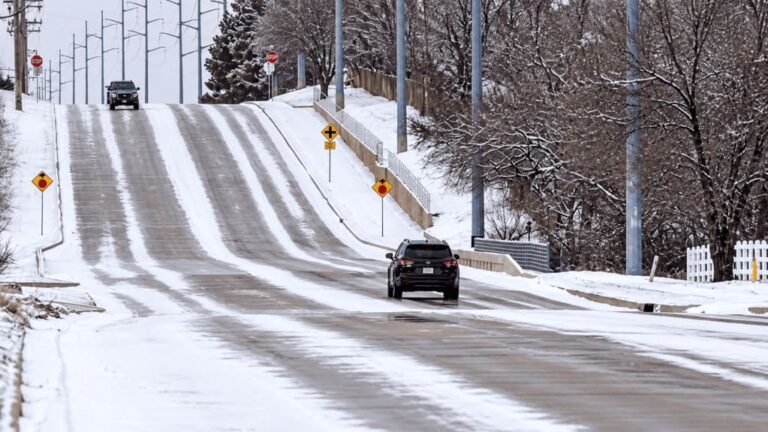
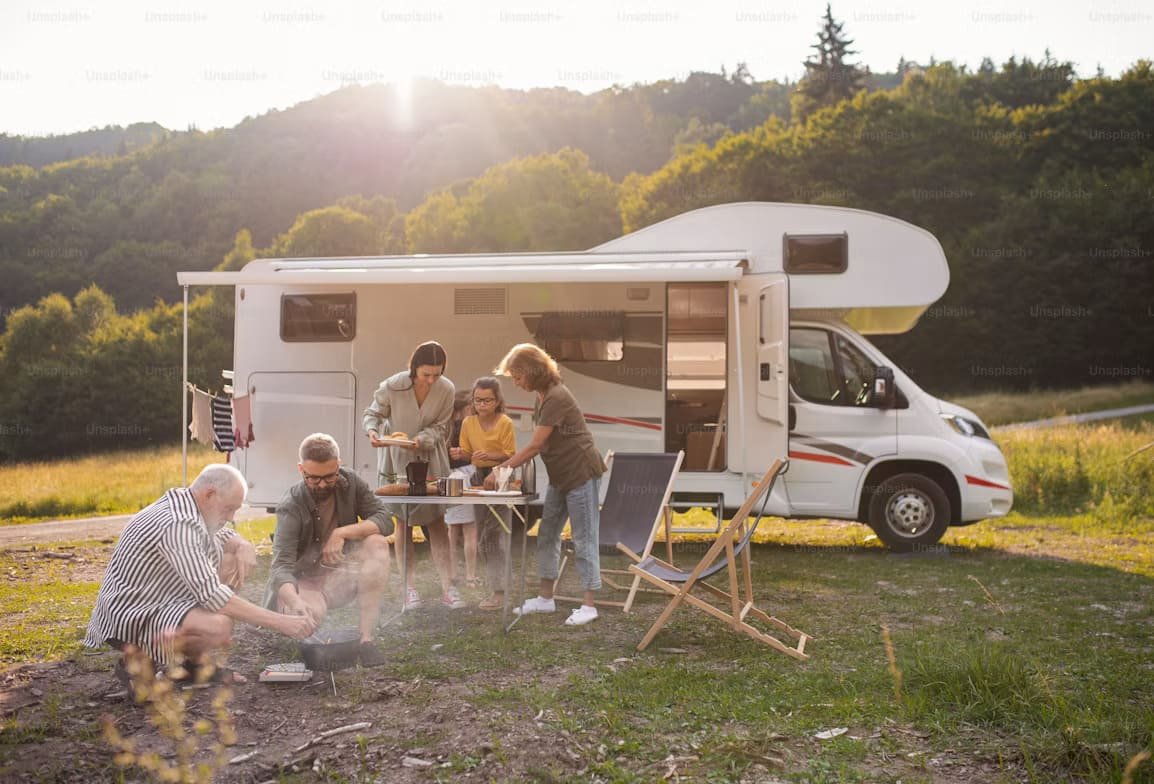
An RV road trip isn’t a car road trip with a bigger vehicle. The RV changes the route, not just the vehicle. A car can turn around in a small lot, fit down a narrow road, take a low-clearance shortcut, or make a spontaneous detour. An RV has to account for its length, width, height, and weight, plus turning radius, steep grades, campground access, and where you can actually park once you arrive. Most RV guides start with the rental checklist. This one starts with the question that comes first: can this RV actually drive the road trip you’re planning?
RV Road Trip Planning at a Glance
| Planning factor | Practical approach |
|---|---|
| Vehicle | Choose the RV after looking at the route, not before |
| Dimensions | Know your exact length, width, height, and weight |
| Route | Check restrictions at the attraction and side-road level, not just the destination |
| Daily driving | Plan the whole travel day, including setup, not miles alone |
| Overnight | Confirm campground site length and hookups, or overnight parking rules |
| Pickup | Document everything and get a real walkthrough before you leave |
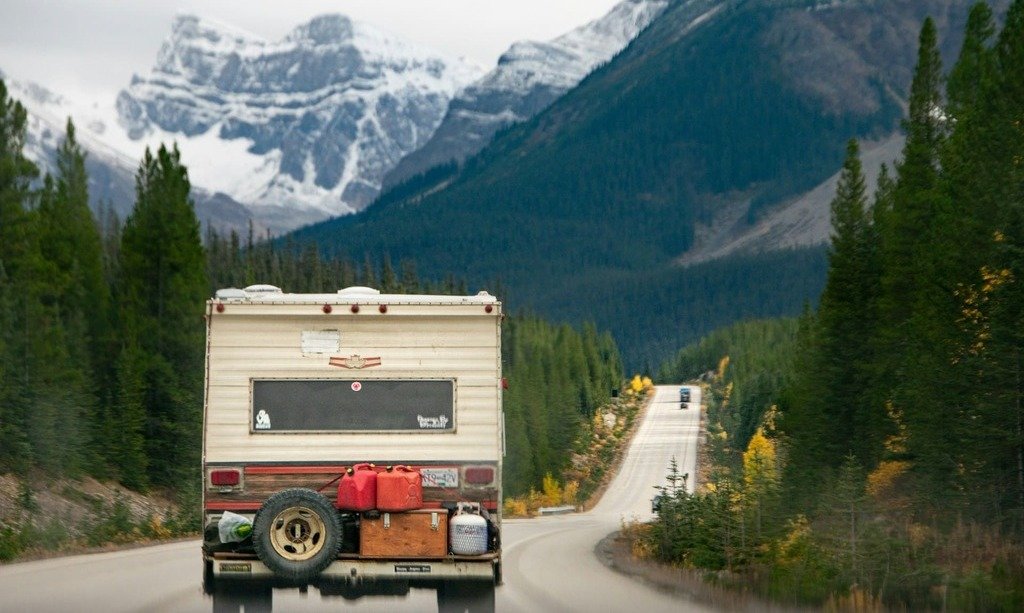
Choose the Right RV for Your Route
Class A, B, and C
Class A motorhomes are the largest, with the most living space and the hardest driving and parking. Class C motorhomes are generally a mid-size option built on a truck- or van-based chassis, and are usually easier to drive and park than a Class A. Class B camper vans are the smallest, easiest to maneuver, and the most limited on interior space. There are already thousands of pages breaking down these classes in detail, so this guide won’t repeat all of that — the more useful question is what size actually makes sense for the route you’re taking.
Travel Trailers and Fifth Wheels
Towables add another layer of planning because you’re now driving two things at once: a tow vehicle and a trailer, each with its own dimensions and each subject to its own restrictions. A road that’s fine for a motorhome isn’t automatically fine for a vehicle towing a trailer, and some routes restrict trailers specifically.
Size Matters More Than Class
A large RV offers more living space but is harder to fit into routes, parking, and campgrounds. A smaller Class B or C is easier to maneuver and generally opens up more of the route, at the cost of interior space. Choose the RV after considering the route, not independently of it.
Know Your Exact Dimensions
Don’t leave the rental counter knowing only “I have a Class C.” Know your RV’s exact length, width, height, and gross vehicle weight. If you’re towing, know the combined dimensions and the relevant weight ratings for the complete setup, not just the tow vehicle. Those numbers are your route-planning constraints — every restriction you check from here on comes down to comparing them against a posted limit.
Does Your Route Actually Allow Your RV?
Don’t ask only whether an RV can reach the destination. Ask whether your specific RV can drive the specific roads you intend to use. The main highway and the roads leading to individual attractions can have completely different rules, which means route compatibility has to be checked at the attraction level, not just the destination level.
The Route-Compatibility Checklist
Before committing to a route, check each of these against your RV’s actual numbers:
| Check | Why it matters |
|---|---|
| Maximum vehicle length | Long RVs may be prohibited outright |
| Maximum width | Narrow roads can exclude wider vehicles |
| Maximum height | Low bridges, tunnels, and overhanging rock |
| Weight limits | Bridges and some mountain roads |
| Trailer restrictions | A motorhome and a towable aren’t treated the same way |
| Road grade | Steep grades stress large vehicles |
| Turning radius | Hairpins and tight junctions |
| Seasonal closures | Mountain roads may not be open when you want them |
| Campground site length | Your RV may not fit the site you booked |
| Dump and fill facilities | Especially important on longer road trips |
| Parking at the destination | Often more restrictive than the highway itself |
| Road surface | Gravel or dirt may not suit your vehicle |
Check the official road, park, or transportation authority for the specific road, not just a general RV map or a navigation app.
Redwood Highway: One Highway, Different Rules
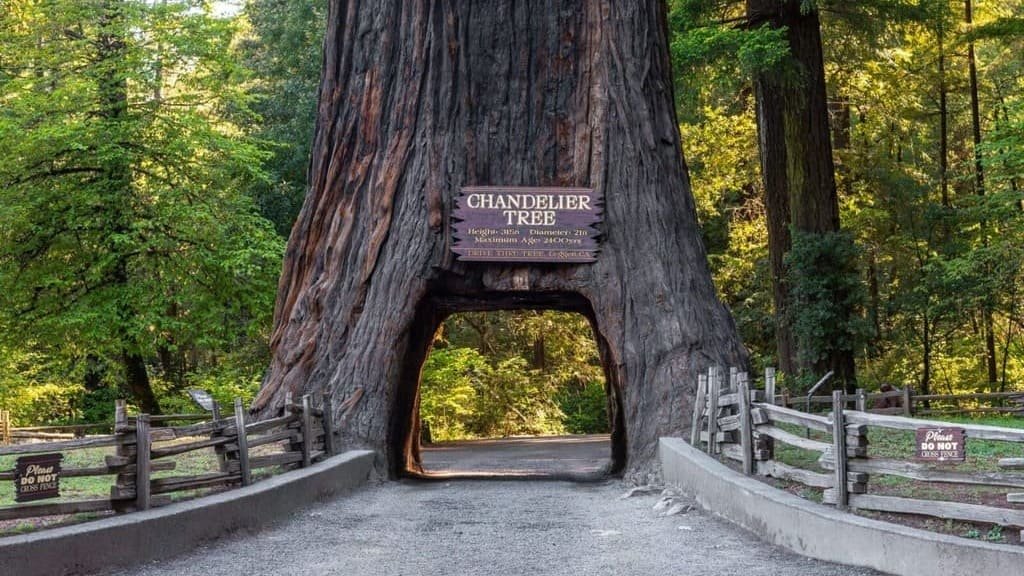
The Redwood Highway is a good example of why this matters. An RV can be perfectly suitable for driving the main highway while being unsuitable for particular side roads leading to individual attractions, including Howland Hill Road and the access road to Fern Canyon, both of which have specific vehicle-size and trailer restrictions. See our Redwood Highway guide for the route details and current rules rather than relying on the highway’s general accessibility to tell you what a specific side road allows.
Going-to-the-Sun Road: A Friendly Destination, a Restricted Road
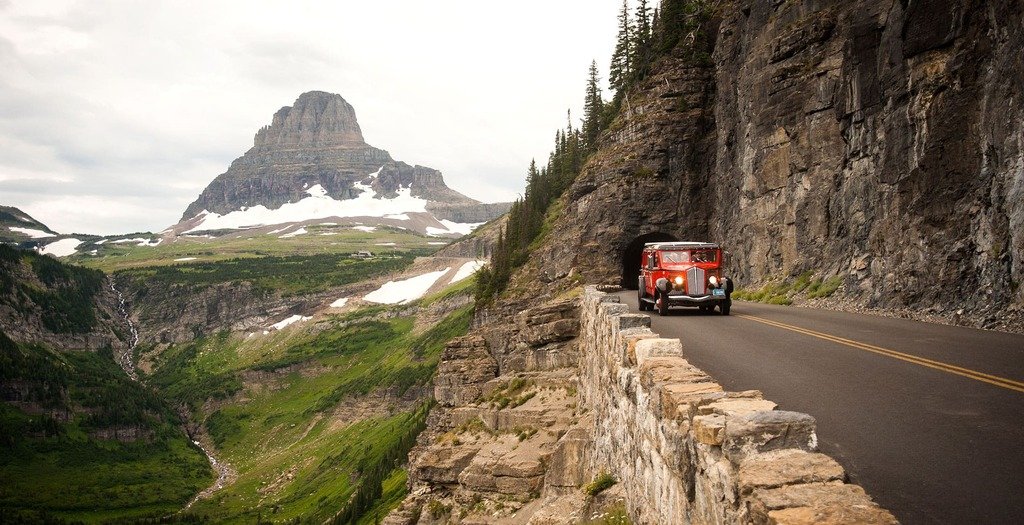
A destination can be RV-friendly while a signature scenic road inside it isn’t. Going-to-the-Sun Road in Glacier National Park has specific vehicle size limits, and the National Park Service’s own directions and road conditions page lists the specific length, width, and height caps. See our Going-to-the-Sun Road guide for how that fits into planning a Glacier trip. The lesson isn’t that RVs can’t visit Glacier — it’s that being welcome at the park doesn’t mean the specific road you’re picturing is open to your vehicle.
National Parks and Scenic Roads
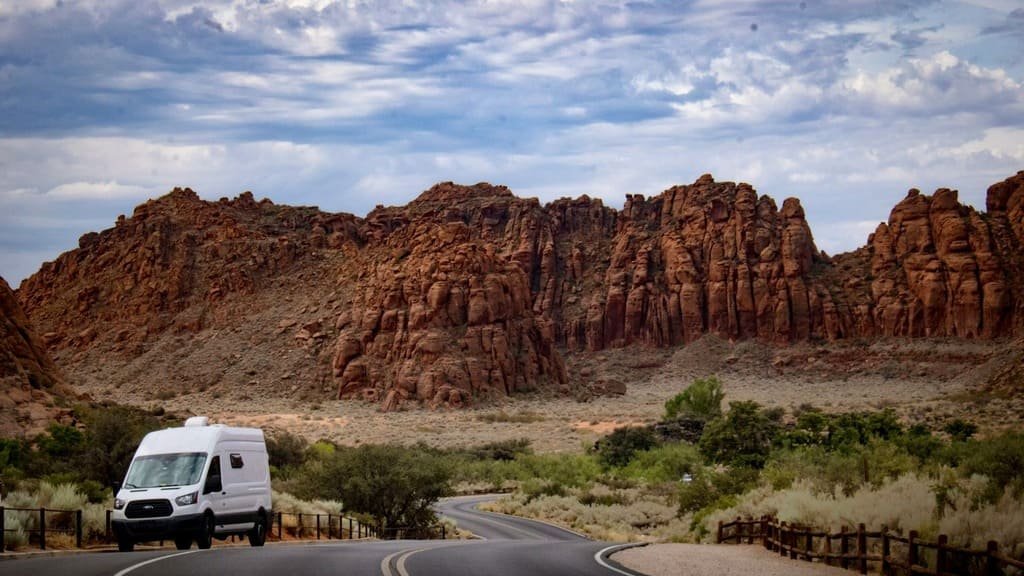
A national park being open to visitors doesn’t mean every road, campground, or attraction inside it accommodates an RV. Park access, road access, and campground access are three separate questions, in that order, and each needs checking against your RV’s dimensions before you build a road trip around it.
How Far Should You Drive Each Day in an RV?
There’s no single mileage number that fits every RV road trip — the same miles-aren’t-hours logic behind our guide to how many miles you should drive in a day applies here, with a few extra variables. Start with the driving hours you actually have, then apply a realistic RV speed rather than a car’s, then factor in stops, terrain, and how much time you want left at the end of the day for arriving and setting up. A 300-mile RV day can feel completely different from a 300-mile car day, particularly on mountain grades or in wind.
The other thing that changes is when the day actually ends. Reaching the campground isn’t the finish line. You may still need to check in, position the RV, level it, connect utilities, set up, deal with a dump station, prepare dinner, and secure everything for the night. Plan the drive with that work in mind, and leave enough daylight to do it without rushing. For a first RV road trip, arrival time can matter as much as mileage: reaching an unfamiliar campground in daylight gives you more time to maneuver, set up, and solve problems without hurrying.
Campgrounds vs. Overnight Parking
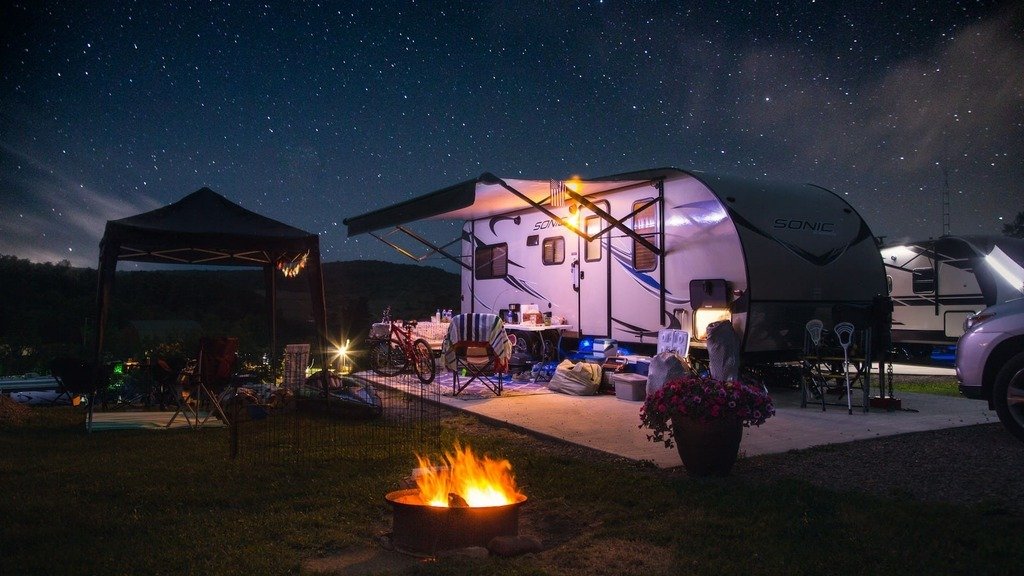
A campground is designed for overnight RV use. Depending on the campground, that can include hookups, dump facilities, potable water, designated sites, and a reservation system, along with length restrictions your RV needs to fit within. Overnight parking is a different thing entirely: a place where parking overnight may be allowed, but that doesn’t automatically mean hookups, dump access, water, or guaranteed permission to stay.
Don’t assume an RV can simply stop wherever a car could. Verify the current rules for the specific location, since overnight policies vary by property, town, and sometimes season. When you need reliable overnight infrastructure, an established campground is usually the more predictable option, and it’s worth confirming site length and hookup availability before you book rather than after you arrive.
What to Check Before You Pick Up the RV
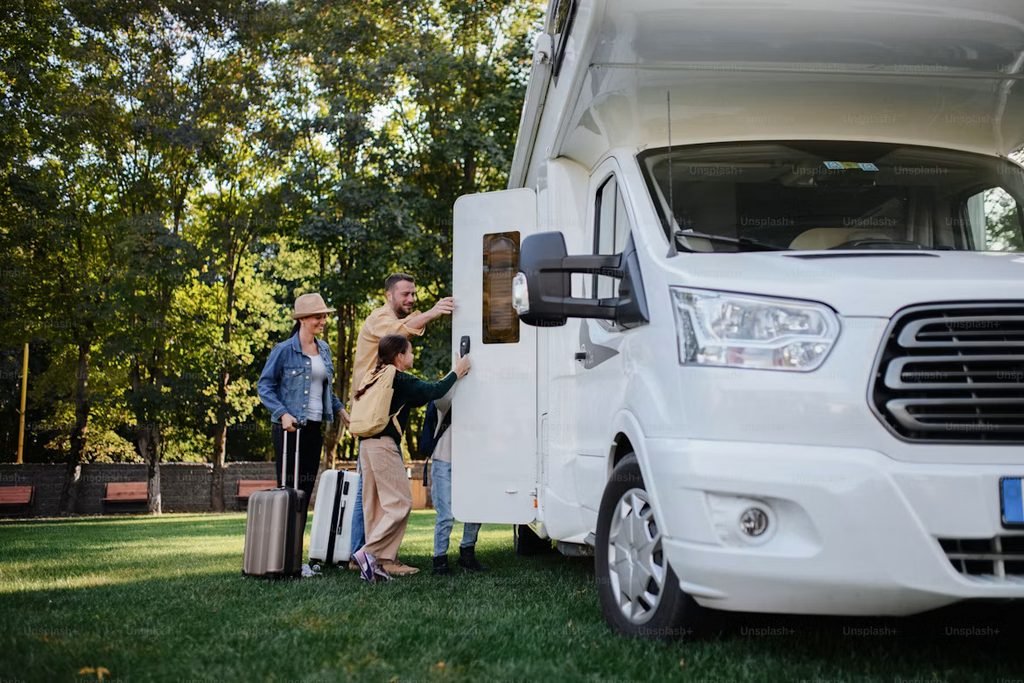
Don’t rush pickup. Before leaving the rental lot, walk through:
- Exterior damage, tires, mirrors, lights, and the windshield
- The awning and storage compartments
- The water system, electrical hookups, and propane system
- The refrigerator, heating and air conditioning, and the generator if equipped
- Leveling equipment and emergency equipment
- Your RV’s exact dimensions, especially height
Photograph everything, inside and out, so you have a clear record of the vehicle’s condition before you leave. Make sure whoever’s driving understands braking distance, turning, reversing, backing, parking, height clearance, and where fuel access works for a vehicle this size, ideally after a short practice drive around the lot before you head onto a real road. Also confirm the fuel type and where the filler is, the freshwater tank location, the gray and black water connections, the shore-power connection, where the propane shutoff is, and what the emergency roadside procedure is. The point is to make sure the first night isn’t the first time you find out how the RV works.
Plan Around RV Trip Load
The RV doesn’t necessarily make a road trip longer because of the driving alone. It makes the whole travel day more operational. Trip Load, the total time, effort, uncertainty, and logistics a route demands beyond its raw mileage, gains several extra layers in an RV.
Driving load
Slower average speeds, a larger vehicle, mountain roads, and exposure to wind and weather.
Transition load
Parking, fueling, campground check-in, setup, and breakdown each time you move.
Infrastructure load
Water, electricity, dump stations, and propane or fuel all have to be managed rather than assumed.
Route-compatibility load
Clearance, width, length, grades, and restrictions all need checking before you commit to a road.
Decision load
Where to stay, where to fuel, where to dump, and whether a given side road is suitable for your vehicle.
Recovery load
Whether you still have energy after a full day of driving and setup, before you’ve even started your evening.
An itinerary that looks manageable on a map can be much heavier once every one of those layers is counted, which is why RV days often need more buffer than the equivalent car day rather than the same schedule with a bigger vehicle.
Who Is an RV Road Trip a Good Fit For?
An RV road trip may suit you if you want your accommodation to move with you, you enjoy slower travel, you like camping and outdoor destinations, you don’t mind setup tasks, you’re comfortable planning overnight stops in advance, and you’re willing to trade some route flexibility for space.
Consider another option if your itinerary depends heavily on narrow scenic roads, you want spontaneous urban exploration, you’re uncomfortable driving a large vehicle, your road trip involves frequent one-night moves, or you want maximum route flexibility above everything else.
Common RV Road Trip Planning Mistakes
- Choosing the RV before checking the route.
- Planning mileage like a car road trip.
- Assuming a national park is RV-accessible because the park is open.
- Ignoring side-road restrictions.
- Forgetting the RV’s height.
- Booking campsites without checking site length.
- Underestimating campground setup time.
- Arriving without knowing where dump and fill facilities are.
- Relying entirely on phone navigation for RV-appropriate routing.
- Assuming every scenic road allows trailers.
- Leaving no backup route.
- Booking an RV that’s larger than the itinerary actually requires.
FAQs
Can you take an RV on any road? No. Vehicle length, width, height, weight, trailer restrictions, road geometry, and seasonal closures can all limit where an RV can go, so check the specific roads on your route rather than assuming access.
Are RVs allowed in national parks? Many are accessible, but park access and access to individual roads, campgrounds, and attractions are separate questions. See our Going-to-the-Sun Road guide and Redwood Highway guide for two examples of how restrictions vary road by road within a single destination.
How many miles should you drive an RV in a day? There’s no single number — it depends on terrain, weather, stops, and how much daylight you want left for campground setup. See our daily-mileage guide for the underlying framework.
Is it difficult to drive an RV for the first time? It depends on the vehicle and your preparation. Know your dimensions, understand turning, braking, backing, and parking, and practice in a low-pressure setting before your main road trip rather than learning on a mountain road.
Do you need reservations for RV campgrounds? Requirements vary by campground and season, so confirm before you go rather than assuming a site will be available on arrival, especially in peak periods.
Can you take a travel trailer on scenic roads? Sometimes, but trailer restrictions can differ from motorhome restrictions, and some roads exclude trailers entirely — check each road’s specific rules for your exact setup.
Is an RV good for a national park road trip? It can work well when the campgrounds, roads, and parking accommodate your vehicle. An RV can be a poor fit for itineraries built around narrow scenic roads, restricted park roads, or frequent one-night moves. Check the route and campground constraints before choosing the RV.
PLAN YOUR TRIP YOUR WAY
Build a day-by-day itinerary around your time, pace, interests, and budget.
The right RV road trip starts with the route, not the rental. Use our planner to explore the roads, stops, and destinations that fit your road trip, then build an itinerary around your available days, driving preferences, and route constraints.