
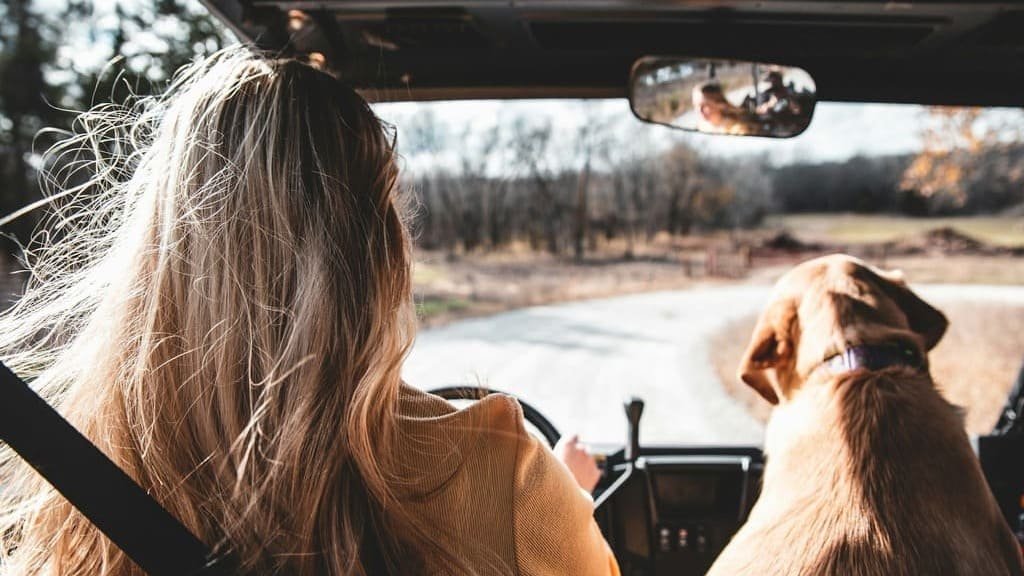
Taking a dog on a road trip isn’t just packing a few extra items into the car. It changes the structure of the trip itself — how often you stop, how you restrain your dog while driving, and how much flexibility you build into each day. Plan around your dog’s actual needs rather than adding a dog to a human itinerary, and the trip goes a lot more smoothly for both of you.
Road Tripping With a Dog: What Changes?
A normal road trip day might look like drive, stop, drive, arrive. With a dog, it becomes drive, bathroom break, water, a short walk, drive, food, another break, then lodging — and different dogs tolerate that rhythm very differently. A puppy, a senior dog, or a dog with anxiety or a medical condition needs a different schedule than a calm, experienced traveler. You’re not simply adding a dog to your existing itinerary. You’re building the itinerary around the dog’s needs.
Road Trip With a Dog: At a Glance
| Planning factor | Practical approach |
|---|---|
| Car restraint | A properly fitted, crash-tested harness or a secured crate |
| Bathroom and stretch stops | Plan regular stops and adjust based on your dog |
| Food | Keep the normal feeding routine where practical |
| Trial drives | Start with short drives before a major trip |
| Identification | Collar ID plus current, up-to-date microchip information |
| Lodging | Confirm the pet policy before booking |
| Hot weather | Never leave your dog unattended in a parked vehicle |

Is It Legal to Drive With an Unrestrained Dog?
There isn’t a dedicated dog-restraint requirement in every state, but that doesn’t mean an unrestrained dog is automatically lawful or safe in every situation. Other traffic, distraction, and animal-welfare laws can still apply.
States With Specific Dog-Restraint Laws
Hawaii, New Jersey, and Rhode Island have statutes that specifically address restraining an animal in a moving vehicle, with real penalties attached. New Jersey’s law requires pets to be secured with a carrier, harness, crate, or barrier, with fines up to $20. Rhode Island requires a pet to be under the control of someone other than the driver, or restrained by a crate, harness, or seat belt; $200 for repeat offenses, but only $50 for a first offense. Hawaii prohibits holding an animal in your lap or letting it interfere with your control of the vehicle, with separate fines for each violation.
Other Traffic and Animal-Welfare Laws
In states without a dedicated pet-restraint statute, distracted-driving laws can still apply if an unrestrained dog is found to have contributed to unsafe driving, and animal-cruelty statutes in most states can cover transporting an animal in a way that puts it at risk. Neither of these is the same as a specific seat-belt law, but together they mean an unrestrained dog isn’t necessarily a legal non-issue just because your state has no pet-specific statute.
Why Safety and Legality Aren’t the Same Thing
Even where no law requires it, restraining your dog reduces the risk of injury in a sudden stop or accident and keeps your dog from becoming a distraction while you’re driving. It’s also worth checking with your own insurer about how an unrestrained pet might factor into a claim after an accident — that depends on your specific policy, not a general rule.
How to Prepare Your Dog Before the Trip
2–4 Weeks Before
Take short practice drives and pay attention to whether your dog shows signs of motion sickness or anxiety. Test out the crate or harness you plan to use before the actual trip, not on day one. Confirm your dog’s collar ID and microchip information is current, and pull together vaccination records and any medications you’ll need. If you’ll need pet-friendly lodging, start looking now rather than the week before.
A Few Days Before
Confirm the pet policies at any hotels or rentals you’ve booked, check your route for reasonable stopping points, and pack food and familiar items. Avoid introducing new gear, food, or equipment right before departure — that’s the wrong time to find out your dog doesn’t like the new crate.
Day of Departure
Keep the morning routine familiar, give your dog a chance to relieve itself before you leave, secure your dog before the car starts moving, and keep essentials like water, a leash, and waste bags within reach rather than buried in the trunk.
How to Safely Restrain Your Dog in the Car
| Option | Best suited to | Main consideration |
|---|---|---|
| Secured crate | Dogs already comfortable traveling in a crate | Must be appropriately sized and properly secured in the vehicle |
| Vehicle harness | Dogs that don’t tolerate a crate well | Fit matters, and not every harness works with every seat belt system |
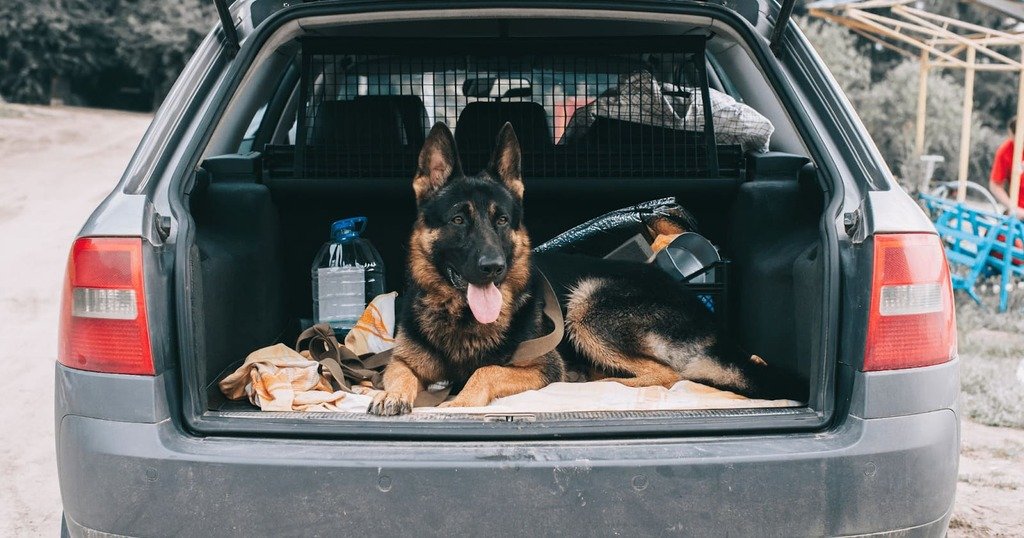
| Cargo barrier | Larger dogs in a suitable SUV or wagon | Keeps the dog contained, but isn’t the same as a crash-tested restraint |
| Unrestrained | — | Not recommended |
A few practical rules regardless of which option you use: don’t let your dog ride in your lap or the front seat, don’t let a dog interfere with pedals, the steering wheel, or other controls, and don’t rely on a loose leash as a substitute for an actual restraint. A leash clipped to a flat collar also isn’t a safe restraint on its own — a sudden stop can put real force on a dog’s neck.
How Often Should You Stop?
A stop roughly every 2–3 hours is a reasonable starting point for planning, but actual frequency depends on your dog’s age, size, health, bladder control, anxiety level, and how they’re handling the weather and the drive itself. A puppy or a senior dog will likely need more frequent breaks than that; a calm, experienced adult dog might comfortably go longer. Watch your dog rather than sticking rigidly to a fixed number.
What to Pack for Your Dog
Beyond the human essentials in our full road trip packing list, your dog needs their usual food and a way to feed it, a collapsible water bowl and extra water, waste bags, a leash and properly fitted restraint, current ID tags and microchip information, vaccination records, any medications, and familiar bedding or a favorite toy to keep some routine in an unfamiliar place.
Finding Dog-Friendly Stops and Lodging
Look for rest stops with grass or a walking area rather than just a parking lot, and check pet policies at hotels or rentals before you book rather than assuming.
Never leave your dog alone in a hot car. Vehicle temperatures can climb dangerously fast even on a mild day and even with the windows cracked. If your dog can’t come inside with you, choose a different stop or change the plan rather than leaving them behind, even for a few minutes.
If Your Dog Gets Anxious or Carsick
Start with short practice drives and build up gradually rather than jumping straight into a long travel day. Keep their setup as familiar as possible, and avoid trying new food right before you leave. If motion sickness or travel anxiety is persistent or significant, talk to your veterinarian about it directly rather than guessing at a solution on your own.
Planning a Road Trip With a Dog by Trip Length
Day trip: restraint, water, food, leash, waste bags, ID, and planned breaks cover most of it.
Weekend trip: add pet-friendly accommodation, a sleeping setup your dog recognizes, vaccination and medical information, familiar bedding, extra food, and a look at the weather for wherever you’re headed.
Multi-day road trip: add a plan for restocking food along the way, medication timing across time zones if relevant, lodging at multiple stops, knowing where veterinary care is available along your route, a plan for cleanup, and more flexible driving days than you’d otherwise build in.
Who Should Take a Dog on a Road Trip?
A dog road trip may not be the best option if your dog becomes severely distressed during car travel, has medical needs that make long-distance travel genuinely difficult, is headed somewhere that isn’t actually dog-friendly, or would spend most of the trip confined without real exercise. Long driving days with few suitable breaks are also a poor match for most dogs. In any of these cases, a trusted pet sitter, a boarding facility, or simply a shorter trip may serve your dog better than bringing them along.
Common Mistakes
- Skipping practice drives before a long trip.
- Letting a dog ride unrestrained, in the front seat, or in your lap.
- Sticking rigidly to a fixed stop schedule instead of watching your dog.
- Introducing new food or gear right before departure.
- Assuming a hotel or rental is pet-friendly without confirming.
- Leaving a dog alone in a parked car, even briefly.
- Not having current ID tags or microchip information before you leave.
FAQs
Is it legal to drive with a dog unrestrained? Only Hawaii, New Jersey, and Rhode Island have laws that specifically require restraining a dog in a moving vehicle. Elsewhere, distracted-driving and animal-cruelty laws can still apply, so an unrestrained dog isn’t automatically a non-issue just because there’s no dedicated statute.
How often should you stop on a road trip with a dog? Roughly every 2–3 hours is a reasonable starting point, but adjust based on your dog’s age, health, and how they’re handling the trip.
What’s the safest way to restrain a dog in the car? A properly fitted, crash-tested harness or a secured crate are the two main options, chosen based on what your dog already tolerates well.
Can I leave my dog in the car while I run into a store? Not if it’s warm out, even briefly — vehicle temperatures can rise dangerously fast. If your dog can’t come with you, pick a different stop.
What should I pack for a dog road trip? Food, water and a bowl, waste bags, a leash and restraint, current ID and microchip information, vaccination records, medications, and something familiar like their bed or a favorite toy.
Should every dog go on a road trip? No. A dog that gets severely anxious or carsick, has medical needs that make travel difficult, or is headed somewhere that isn’t genuinely pet-friendly may be better off with a sitter, boarding, or a shorter trip.
PLAN YOUR TRIP YOUR WAY
Build a day-by-day itinerary around your time, pace, interests, and budget.
Use our trip planner to build a route around your preferred driving pace, stops, and destinations, with enough flexibility built in for your dog’s needs.