
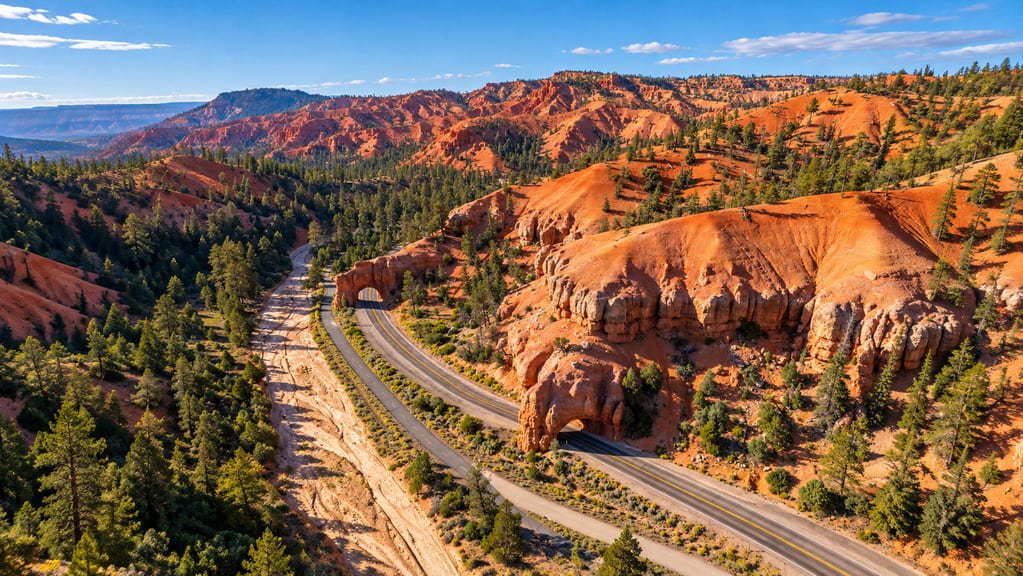
Seven days is tight but workable for a Utah Mighty 5 Road Trip— Zion, Bryce Canyon, Capitol Reef, Canyonlands, and Arches. Ten days is more comfortable, and 12–14 gives real flexibility for hiking and detours. There’s no single “best” duration — it depends on how much hiking you want versus how much you’re comfortable driving. Most road trippers go geographically in one direction: Zion → Bryce Canyon → Capitol Reef → Canyonlands → Arches, though the reverse works just as well depending on where you’re starting. A few 2026 rule changes — covered in full below — are worth checking before you book anything.
The Utah Mighty 5 Parks at a Glance
| Park | Best Scenic Drives & Viewpoints | Recommended Time | Hiking Demand | Driving Character | Entrance Fee (7-day) |
|---|---|---|---|---|---|
| Zion | Zion-Mt. Carmel Highway, canyon viewpoints | 2–3 days | High if hiking | Shuttle-dependent canyon access | $35 |
| Bryce Canyon | Rim Road overlooks | 1–1.5 days | Moderate | Compact, easy to combine with short walks | $35 |
| Capitol Reef | Scenic Drive, Fruita, Waterpocket Fold | 1–1.5 days | Light–moderate | Longer scenic detours possible | $20 |
| Canyonlands | Island in the Sky overlooks | 1–2 days | Light–high by district | Remote, viewpoint-focused | $30 |
| Arches | Scenic Drive, Windows, Delicate Arch | 1–2 days | Moderate | Short drives, real walking at key sights | $30 |
An America the Beautiful annual pass ($80) covers all five and pays for itself after two or three parks. Fees are current as of this update — verify at nps.gov before your trip.
Utah Mighty 5 Road Trip Route
Follow the classic five-park road trip through southern Utah.
Zion
Bryce Canyon
Capitol Reef
Canyonlands
Arches
Why This Route Order Works
Zion → Bryce → Capitol Reef → Canyonlands → Arches moves roughly eastward across southern Utah with no real backtracking. Bryce sits a short drive from Zion; Capitol Reef is a natural midpoint transition further east; Canyonlands and Arches both work off Moab as a shared base. It’s not the only correct order — reversing it works equally well if you’re starting near Moab rather than Zion — but it’s the one that avoids doubling back across the state.

How Many Days Do You Need?
5 days is possible but aggressive — a highlights-only trip for travelers who’d rather see all five parks briefly than hike or explore slowly. Zion suffers the most from this pace, since its shuttle system and permit-dependent hikes don’t reward rushing.
7 days is tight but workable, and the most common choice for a representative first visit to all five.
10 days is the more comfortable recommendation for a first trip — it allows real hiking time, slower mornings, and buffer for weather or crowds, without feeling like a highlight reel.
12–14 days suits travelers who want deeper exploration: longer hikes, scenic detours off the standard loop, or side trips like Capitol Reef’s Cathedral Valley.
The right number depends on hiking interest, driving tolerance, season, and whether you want just the five parks or a broader Utah trip.
| Trip Length | Pace | What You Get |
|---|---|---|
| 5 days | Very fast | Highlights only, minimal flexibility |
| 7 days | Fast but workable | All five parks, limited buffer |
| 10 days | Comfortable | Good first-trip balance, more hiking time |
| 12–14 days | Relaxed | Deeper exploration, room for detours |
7-Day Utah Mighty 5 Itinerary
Day 1 — Zion arrival. Settle in, first viewpoints, evening in Springdale. Day 2 — Zion. Main hiking day; plan around shuttle hours and any permit-dependent hikes. Day 3 — Zion → Bryce Canyon. Drive (~1.5–2 hrs), afternoon rim viewpoints, sunset if clear. Day 4 — Bryce → Capitol Reef. Morning at Bryce, drive east (~2 hrs), afternoon/evening in Capitol Reef. Day 5 — Capitol Reef → Moab. Morning at Capitol Reef, drive to Moab (~2.5–3 hrs). Day 6 — Canyonlands. Island in the Sky viewpoints and short walks. Day 7 — Arches. Major highlights, departure or onward travel.
10-Day Utah Mighty 5 Itinerary
Days 1–3 — Zion. Extra day goes here first — more hiking time, less shuttle-driven rush. Days 4–5 — Bryce Canyon. A full second day allows the canyon-floor trails, not just the rim. Days 6–7 — Capitol Reef. More time for Fruita, the Scenic Drive, and Cathedral Valley if you’re up for a detour. Day 8 — Canyonlands. Days 9–10 — Arches / Moab. Extra day for Arches itself or a rest day in Moab before departure.
The extra three days over the 7-day version mostly go to Zion and Capitol Reef — the two parks most likely to feel rushed on a tighter schedule.
Where Should You Start for Utah Mighty 5 Road Trip Itinerary?
- Las Vegas is the most common starting point for a Zion-first itinerary and typically the easiest airport to fly into for this route.
- Salt Lake City works as a northern gateway, useful if your flights or broader Utah plans favor it — it adds driving time to reach Zion first, so many Salt Lake City starts reverse the route and begin at Arches instead.
- Other gateways (Denver, for instance) are workable but usually less efficient for a pure Mighty 5 loop, adding significant extra driving without much added value.
Driving Times Between the Parks
| Leg | Approximate Time |
|---|---|
| Zion → Bryce Canyon | 1.5–2 hrs |
| Bryce Canyon → Capitol Reef | ~2 hrs |
| Capitol Reef → Moab | 2.5–3 hrs |
| Moab → Canyonlands (Island in the Sky) | ~40 min |
| Moab → Arches | ~10 min |
Drive time isn’t the same as sightseeing time. A 40-minute drive to Canyonlands can easily become a 6–8 hour day once overlooks, short hikes, and photo stops are added — the same “miles aren’t hours” principle covered in our driving-time planning guide.
Where to Stay
Zion: Springdale, right at the park’s south entrance. Bryce Canyon: Bryce Canyon City or nearby. Capitol Reef: Torrey, a few miles from the park. Canyonlands + Arches: Moab, which works as a single base for both — no need to change hotels between them. Fewer hotel changes overall means less trip friction; you don’t need a new town every single night to make this route work.
How Much Time Per Park?
The baseline in the table above shifts by traveler type: hikers should lean more time toward Zion, Arches, and Canyonlands; viewpoint-focused travelers can shorten Bryce; slower travelers benefit from adding a buffer day at Capitol Reef; photographers should build in sunrise/sunset windows rather than treating each park as a single daytime block; RV travelers need to account for parking and the Zion vehicle restrictions covered below.
What Each Park Is Actually Like
- Zion rewards time more than any other park here — the mandatory shuttle and Angels Landing’s permit lottery mean you can’t just show up and hike whatever looks interesting. Best for travelers willing to plan a day or two around its logistics.
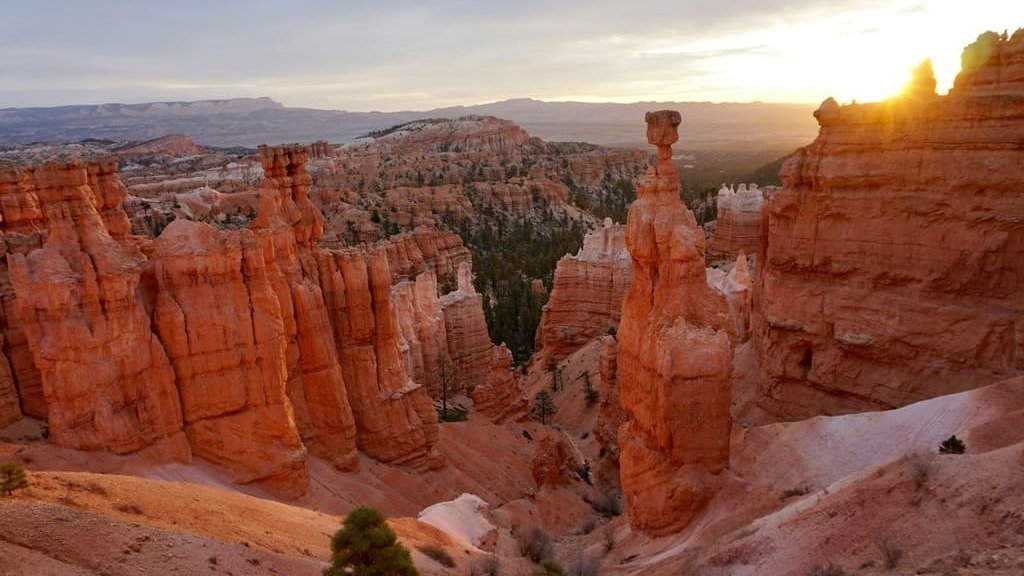
- Bryce Canyon is the most drive-and-viewpoint-friendly — the Rim Road covers most highlights without a hike, though descending into the amphitheater (Navajo Loop, Queen’s Garden) is worth a few extra hours if you have them.
- Capitol Reef is the quietest of the five, easy to underestimate and rush through. Its Scenic Drive and Fruita’s historic orchards reward travelers who slow down rather than treat it as a stop between “bigger” parks.
- Canyonlands (Island in the Sky) is almost entirely a viewpoint park unless you’re equipped for long, remote hikes or a high-clearance vehicle into the Needles or Maze districts — most Mighty 5 trips only see Island in the Sky, which is the right call for most travelers.
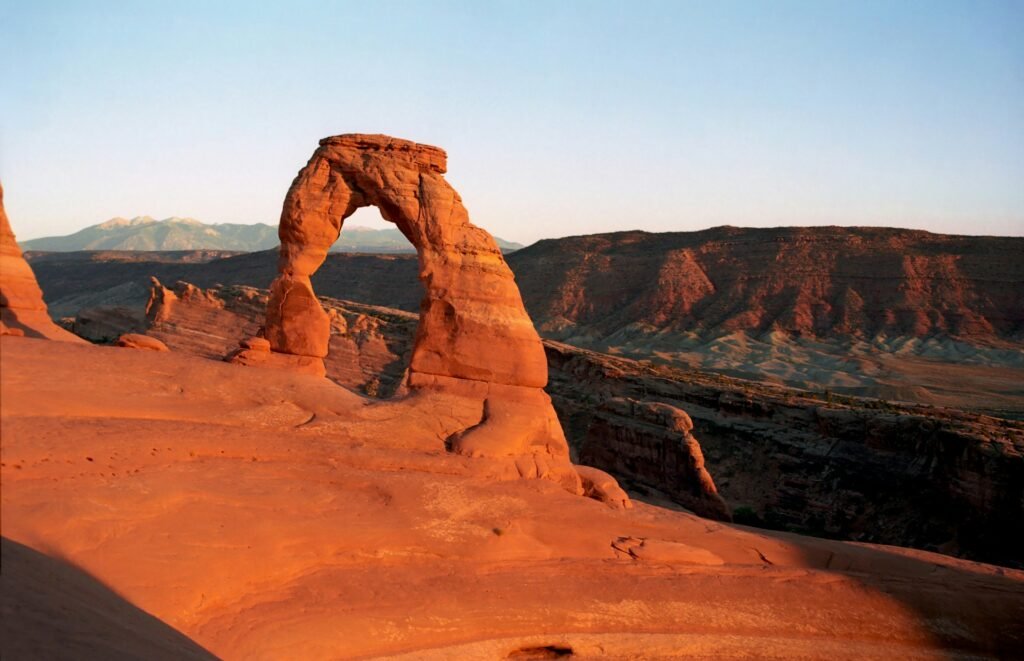
- Arches has the shortest drive time of the five but the most walking required to see its named features — almost nothing here, Delicate Arch included, is visible from the road alone.
What’s Changed for 2026
- Arches dropped its timed-entry reservation requirement. After running the system since 2022, NPS ended it for 2026 — enter any time during operating hours with a valid entrance pass. A lot of existing content online still says to book a slot; that’s outdated. Devils Garden Campground and Fiery Furnace permits still require separate booking through Recreation.gov.
- Zion’s shuttle is mandatory, not optional, during its season. From March 7 through November 28, 2026 (plus a short holiday run), private vehicles can’t drive the Zion Canyon Scenic Drive past Canyon Junction — the free shuttle, which needs no reservation, is the only way in. This is specifically about the Scenic Drive, not the separate Zion-Mt. Carmel Highway, which remains open to private vehicles.
- A new $100 non-resident surcharge applies as of January 1, 2026. Non-US residents 16 and older pay this per person at Zion and several other major parks, on top of the standard entrance fee. The America the Beautiful Non-Resident Annual Pass ($250) waives it for the holder and everyone in their vehicle.
- Large vehicles face new hard limits on the Zion-Mt. Carmel Highway starting June 7, 2026. Vehicles over 7’10” wide, 11’4″ tall, 35’9″ long, or 50,000 lbs are rerouted rather than escorted — the previous paid-escort system through the tunnel is being eliminated entirely, not kept as a workaround.
Best Time to Go
| Season | Main Advantage | Main Challenge | Best For |
|---|---|---|---|
| Spring | Comfortable temps, changing landscapes | Weather variability | Hiking + scenic driving |
| Summer | Long daylight, full access | Extreme heat at lower elevations | Early-start itineraries |
| Fall | Balanced temps | Higher crowds | Most travelers |
| Winter | Snow scenery, quieter | Ice at Bryce, seasonal trail limits | Experienced travelers, photographers |
No single season is universally best — spring and fall offer the strongest overall balance, but each has trade-offs worth planning around rather than avoiding entirely.
Common Mistakes
- Trying all five parks in 5 days without weighing the trade-off. It’s doable, but it’s a highlights trip, not a complete one.
- Treating Moab as just a place to sleep. It’s a genuinely useful two-park base — don’t skip staying there to save a few minutes.
- Underestimating walking time at Arches and hiking time at Zion.
- Planning by driving mileage instead of total daily trip load — stops, shuttles, and hikes add up faster than miles suggest.
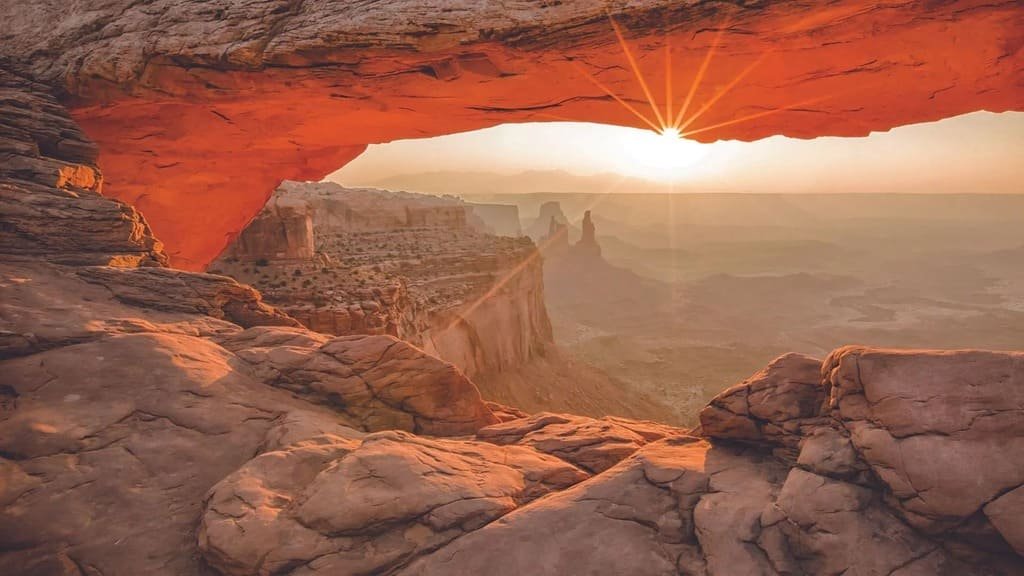
- Ignoring sunrise/sunset timing at parks (Mesa Arch, Delicate Arch) where the light is a real part of the experience.
- Leaving no buffer for weather or road conditions, especially in winter or at Bryce’s elevation.
Frequently Asked Questions
How many days do you need for the Utah Mighty 5? 7 days works; 10 is more comfortable, especially for hiking.
What order should you visit the Mighty 5 in? Most go geographically — Zion, Bryce, Capitol Reef, then Canyonlands and Arches from Moab — though the reverse works too.
Can you do the Utah Mighty 5 in 5 days? Yes, but it’s a highlights-only trip with little room for weather delays or long hikes.
Do you need a reservation for Arches in 2026? No — timed entry was dropped for the 2026 season; a standard entrance pass still applies.
Is the Zion shuttle required? Yes, during its season (roughly March–late November 2026) for the Zion Canyon Scenic Drive specifically.
What airport is best for this trip? Las Vegas for a Zion-first route; Salt Lake City if your plans favor starting near Arches instead.
Do you need an America the Beautiful pass? It pays for itself after two or three of the five parks’ entrance fees.
Are there special rules for international visitors in 2026? Yes — a new $100-per-person surcharge applies to non-US residents 16+ at several parks, including Zion, waivable with the Non-Resident Annual Pass.
Plan your Utah Mighty 5 road trip. Build a route around your starting point, trip length, and how much hiking versus driving you actually want each day.
PLAN YOUR TRIP YOUR WAY
Build a day-by-day itinerary around your time, pace, interests, and budget.
Use the Miles & Mapped planner to map it out, or read our driving-time planning guide for more on why miles and hours aren’t the same thing.
1 thought on “Utah Mighty 5 Road Trip: 7 & 10-Day Itinerary Guide”