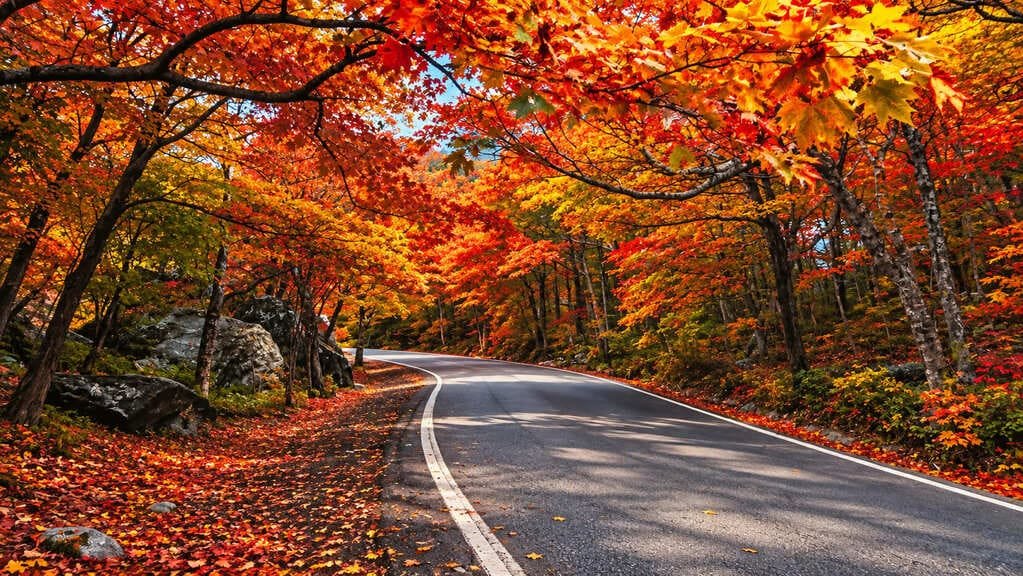
Peak color doesn’t arrive everywhere at once. It generally moves from north to south and from high to low elevation over several weeks—which means “when is peak foliage” doesn’t have one answer, even within a single state. Any given spot typically holds close to peak color for something like a week to ten days as a rough planning guide, not a fixed rule, before it fades toward its lower-elevation neighbors.
The best fall foliage road trips aren’t about guessing one perfect date — it’s about choosing the right region for the week you’re actually traveling, and staying flexible enough to follow the color if it shifts. Forecasts are planning tools, not guarantees.
2026 Fall Foliage Outlook
Current 2026 forecasts point toward a somewhat later-than-average foliage season in many areas, based on Old Farmer’s Almanac, AccuWeather, and specialist New England foliage-tracking sources — though exact local timing depends heavily on weather in the weeks before you travel. The familiar pattern still applies: color starts in northern latitudes and higher elevations first, then works its way south and downhill. Check updated local foliage reports before finalizing your dates — a forecast made in August can shift by a week or more depending on how September and early October actually play out.
2026 Foliage Timing at a Glance
| Region | Typical Progression | Approx. Window* | Best Route/Area |
|---|---|---|---|
| Northern New England | Earliest | Late Sept–early Oct | White Mountains, Kancamagus Highway |
| Vermont | North → south | Early–mid Oct | Green Mountains |
| Adirondacks | High → low elevation | Late Sept–mid Oct | High Peaks region |
| Colorado | High elevations first | Late Sept–early Oct | San Juan Skyway, Kebler Pass |
| Upper Midwest | North → south | Late Sept–mid Oct | Great Lakes region |
| Blue Ridge Parkway | Later, elevation-driven | Mid-Oct–early Nov | Full parkway |
| Great Smoky Mountains | Elevation-driven | Mid-Oct–early Nov | Newfound Gap Road |
*Ranges based on current 2026 forecasts as of this update — treat as planning windows, not fixed dates, and check closer to your trip.
Best Fall Foliage Road Trips by Region
New England
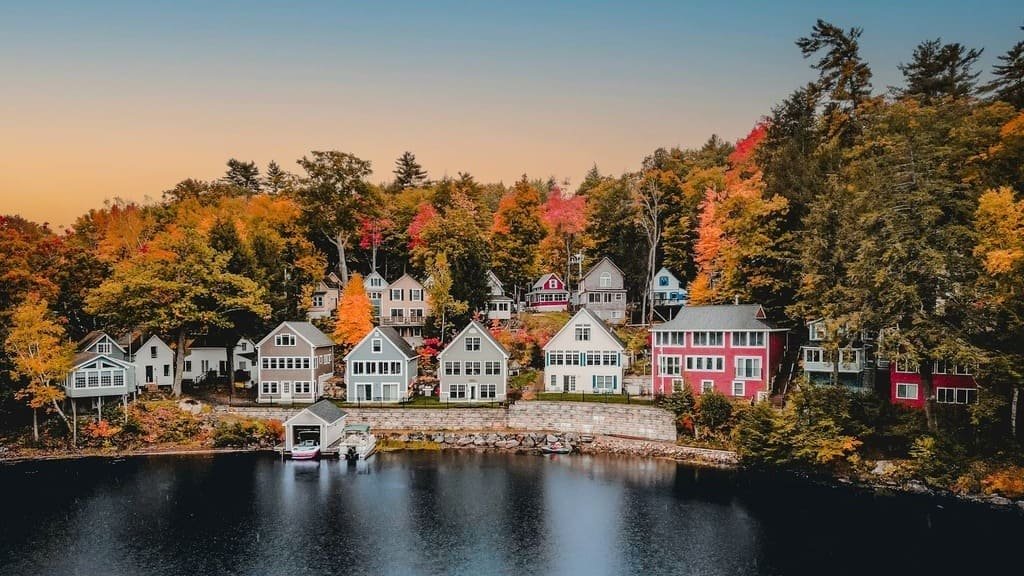
Kancamagus Highway & White Mountains. A 34.5-mile drive through the White Mountain National Forest that’s one of the most reliable fall color corridors in the country — elevation changes along the route mean you can often find near-peak color somewhere on the drive even outside the exact peak week. 2–3 days, low-moderate driving intensity, though weekend traffic and photographers stopping suddenly at overlooks add real friction during peak weeks.
Vermont. The Green Mountains offer a genuinely different experience than the Kancamagus — smaller secondary roads, working farms, and classic New England towns rather than one signature highway. Color moves north to south across the state over roughly two to three weeks, so a Vermont trip rewards flexibility more than a fixed itinerary. 3–4 days.
A combined New England foliage loop (5–7 days) linking the White Mountains, Vermont, and a coastal Maine or Massachusetts stretch is a reasonable way to hedge against any single region peaking early or late.
Blue Ridge Parkway & Great Smoky Mountains
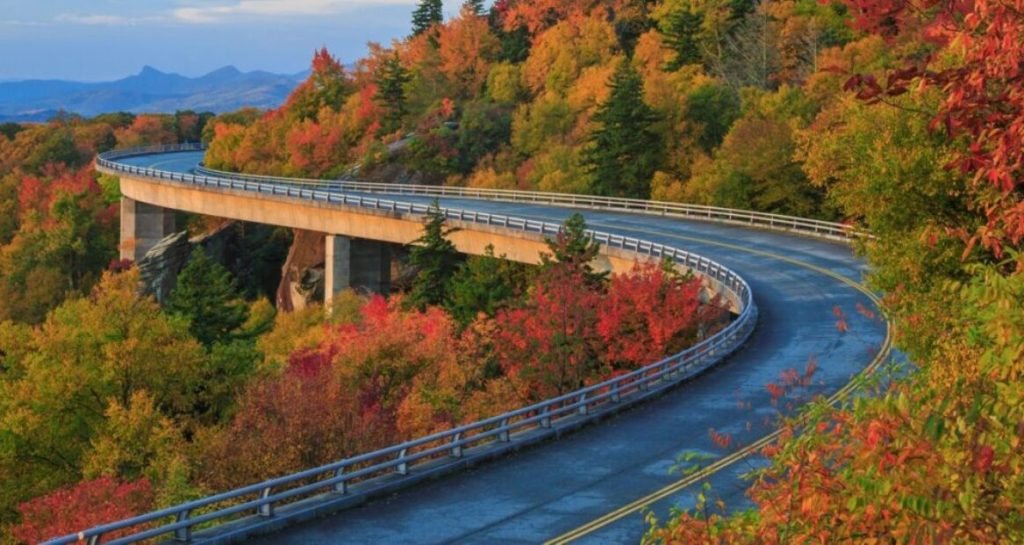
Both run later than New England, typically peaking mid-October through early November, and both are strongly elevation-driven — color arrives at higher elevations first and moves down into the valleys over several weeks. The Blue Ridge Parkway is the more classic scenic-drive experience, 469 miles with a 45 mph cap throughout; the Smokies add more hiking-accessible viewpoints and generally later lower-elevation color into early November. Choosing between them often comes down to whether you want a long linear drive (Blue Ridge) or a more compact park-based trip (Smokies).
Adirondacks & Upstate New York
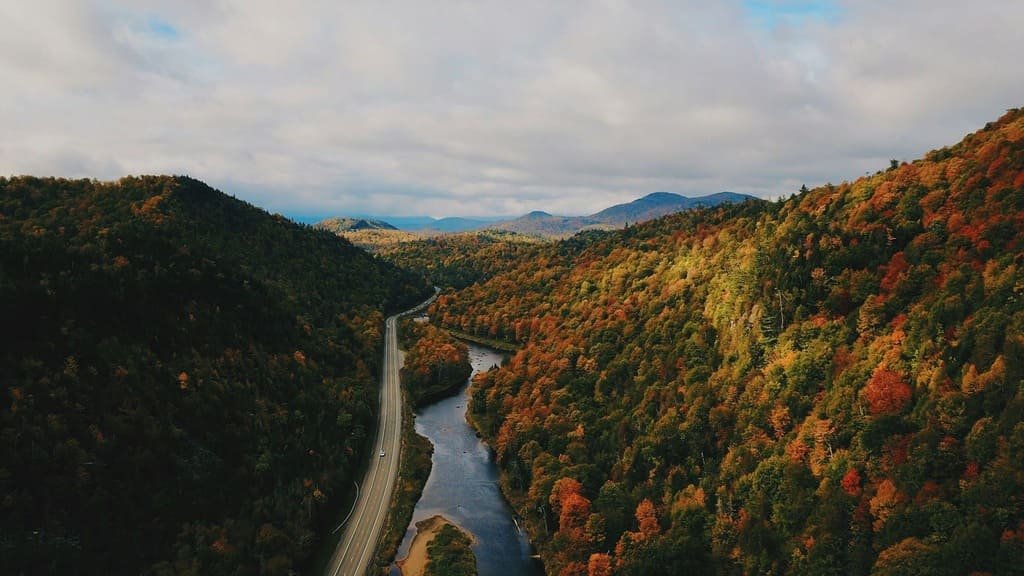
A less crowded alternative to “classic New England,” combining mountain foliage with lakes — a Lake Placid–to–Lake George style route through the High Peaks region gives you both without the Kancamagus’s weekend traffic. The region rewards travelers willing to trade a slightly less iconic name recognition for a genuinely quieter drive at a similar quality of color. Timing follows the same high-to-low elevation pattern as everywhere else on this list — expect the higher peaks around Lake Placid to turn before the lower lake country further south. Check current road conditions before finalizing a specific route, since seasonal closures are possible at higher elevations. 3–4 days is a reasonable length for this route without feeling rushed.
Colorado Aspens
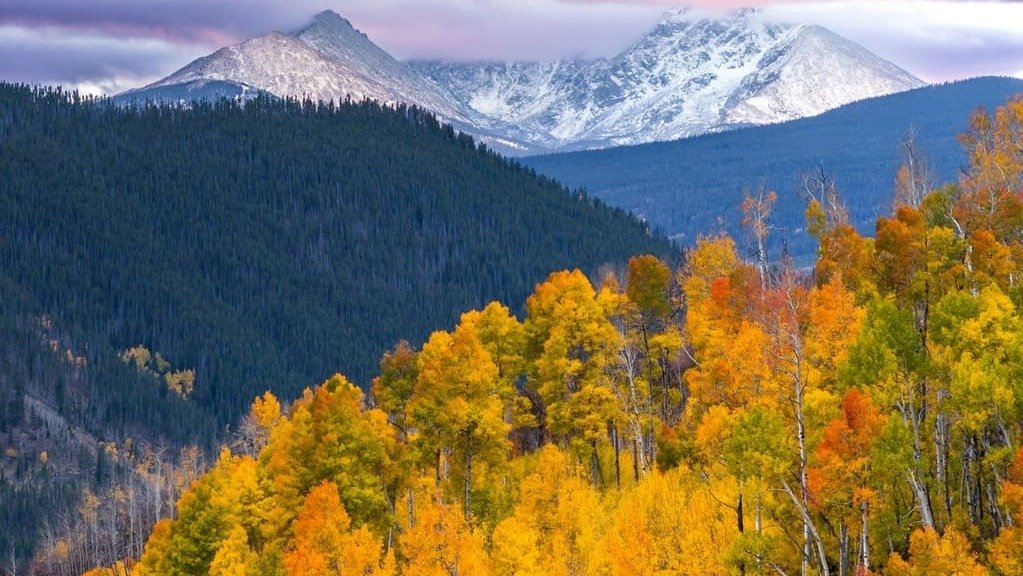
Colorado’s foliage is fundamentally different from the deciduous-forest color further east — it’s primarily an elevation-driven aspen display rather than a broad forest turning, concentrated in a narrower window in late September through early October that moves fast even by foliage-trip standards. The San Juan Skyway and Kebler Pass area are two of the strongest aspen corridors, with Kebler Pass in particular known for dense, uninterrupted stands of gold aspens rather than the mixed-color displays typical of eastern hardwood forests. Some high-elevation routes have limited seasonal access, so don’t assume every scenic mountain road stays open through the full foliage window — check current conditions rather than assuming last year’s access applies. 4–6 days covers a reasonable Colorado aspen loop.
Upper Midwest & Great Lakes
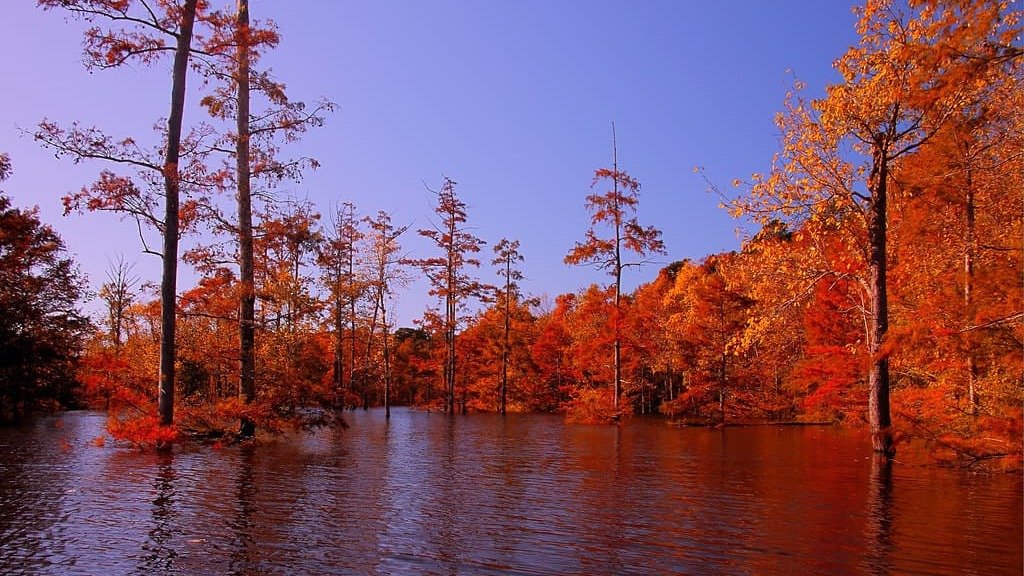
Michigan, Wisconsin, and Minnesota offer huge forests and lake-lined scenic drives without the stereotypical New England crowds or prices. The trade-off is less name recognition and fewer dedicated “foliage tourism” amenities, which for many travelers is exactly the appeal. Timing follows the same north-to-south progression as New England, generally running late September through mid-October, with lake-adjacent areas sometimes holding color a few days longer than inland forest due to the moderating effect of the water.
Which Foliage Road Trip Is Right for You?
| If You Want… | Choose… |
|---|---|
| Classic fall scenery | New England |
| Mountain foliage | Colorado |
| Coastal + foliage combination | New England/Northeast |
| Later-season colors | Blue Ridge/Smokies |
| Lakes + fall colors | Adirondacks/Great Lakes |
| High-elevation aspens | Colorado |
| A longer road trip | New England loop |
| A short scenic drive | Kancamagus or a Blue Ridge section |
Best Foliage Trips by Trip Length
2–3 days: Kancamagus Highway, a Blue Ridge Parkway section, an Adirondack loop.
4–5 days: Vermont, the full White Mountains region, the Smokies.
7 days: A full New England foliage loop, or a Colorado aspen road trip.
10+ days: A multi-state Northeast foliage trip covering New England, the Adirondacks, and a Blue Ridge extension.
How to Time Your Fall Foliage Road Trip
1. Choose your region based on your travel dates, not the other way around. Instead of “I want to see peak foliage,” start from “I’m traveling October 10–15 — where is color likely to be good then?” Your actual travel window should drive the region choice, not an idealized peak date you build everything else around.
2. Watch the forecast as your trip approaches. Old Farmer’s Almanac, AccuWeather, specialist foliage trackers, state tourism foliage reports, and local park or forest service updates all get more accurate the closer you get to your travel dates — an August forecast is a starting point, not a final answer.
3. Keep the itinerary flexible. Rather than booking six nights in one fixed location months ahead, consider refundable lodging, a route that can shift between two or three viable regions, and checking foliage reports shortly before departure rather than locking everything in early.
How to Chase the Color
If northern areas peak early, move south rather than assuming your trip is ruined. If mountaintops peak first, drop to lower elevations for a few more days of color. If your destination peaks earlier than expected, adjust the route instead of canceling — foliage rarely disappears all at once across an entire region. If weather delays the color, shift your itinerary rather than forcing the original schedule onto conditions that haven’t caught up yet.
Peak Color vs. Best Road-Trip Experience
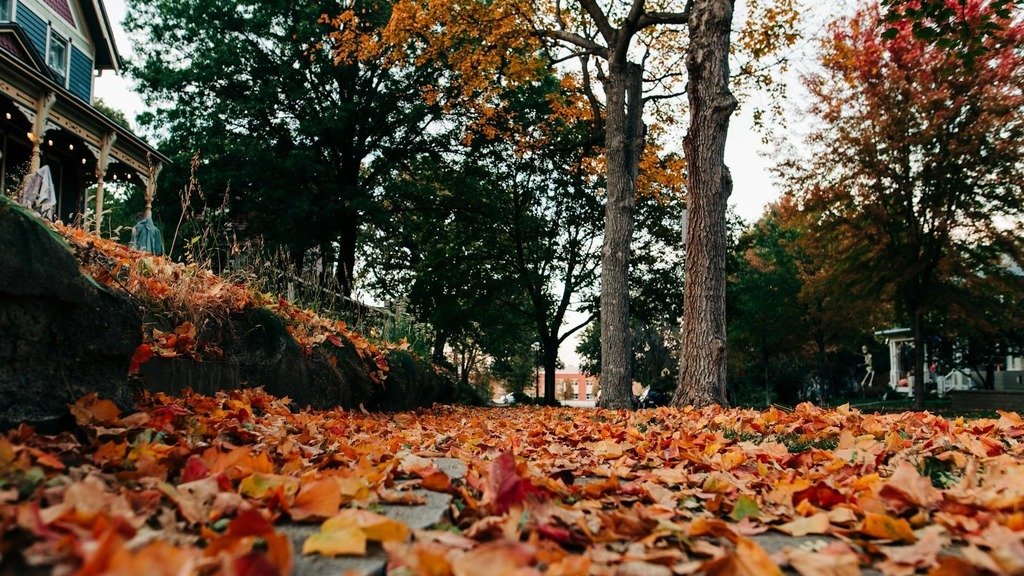
The single “peak” day for color isn’t necessarily the best day for the trip itself. A visit slightly before or after peak often means fewer crowds, cheaper lodging, easier parking, less traffic on narrow scenic roads, and still plenty of color — chasing the exact statistical peak can mean fighting weekend crowds and packed overlooks for a marginal difference in vibrancy.
Driving Intensity for Foliage Routes
Foliage drives carry an unusual trip load beyond their normal driving intensity: weekend traffic spikes, narrow mountain roads, drivers stopping suddenly at overlooks, full parking areas, and weather that can turn a scenic drive slow with little warning. Rate the Kancamagus and Vermont’s secondary roads as low-moderate in normal conditions but moderate during peak weekends specifically; Blue Ridge Parkway and Colorado’s high-elevation routes as moderate given elevation and road width. The same “miles aren’t hours” principle from our driving-time planning guide applies here — a short mileage day can still eat a full afternoon once photo stops and overlook traffic are factored in.
Common Foliage Road Trip Mistakes
- Booking one exact “peak” date months in advance. Forecasts made in summer shift by a week or more as the season approaches.
- Assuming peak occurs simultaneously across an entire region. A single state can span two or three weeks of progression from its highest points to its valleys.
- Ignoring elevation. It matters as much as latitude for timing, especially in Colorado and the Smokies.
- Trying to chase foliage too far in one day. A “just one more overlook” mentality adds up fast on narrow, slow roads.
- Assuming scenic roads will be empty. Weekend peak-season traffic on routes like the Kancamagus is real and worth planning around.
- Planning every hour of the trip. Foliage conditions change day to day — an overly rigid itinerary leaves no room to chase better color if the forecast shifts.
- Choosing a single destination instead of a foliage corridor. A region with multiple viable stops (a full parkway, a multi-town Vermont route) hedges against any one spot peaking at the wrong time.
Frequently Asked Questions
When is peak fall foliage in the USA? It varies by region and elevation — northern New England and Colorado’s high-elevation aspens typically peak late September through early October, while the Blue Ridge Parkway and Smokies run mid-October through early November.
What month is best for a fall foliage road trip? October covers the most ground nationally, though late September suits northern/high-elevation routes and early November suits the Smokies and southern Appalachians.
Where is the best place to see fall colors? Depends on what you want — New England for classic scenery, Colorado for aspens, the Blue Ridge/Smokies for a later-season trip, the Adirondacks or Great Lakes for lakes plus foliage without New England’s crowds.
Which fall foliage road trip is best for first-timers? The Kancamagus Highway is compact, well-known, and forgiving for a first foliage trip — 2–3 days is enough to get a strong sense of it.
Can you predict peak foliage accurately? Only approximately — forecasts made months ahead are a planning starting point, and even short-range forecasts can shift with a single early cold snap or an unusually warm stretch.
How long does peak fall foliage last? Roughly a week to ten days at any single location as a general guide, though this varies by species, weather, and elevation.
How do you plan a fall foliage road trip? Pick a region based on your actual travel dates, watch forecasts as the trip approaches, and keep lodging and routing flexible enough to adjust if the color shifts earlier or later than expected.
PLAN YOUR TRIP YOUR WAY
Build a day-by-day itinerary around your time, pace, interests, and budget.
Plan Your Fall Road Trip
Don’t plan your fall road trip around a single date — plan it around the movement of the color. Use the Miles & Mapped planner to build a flexible route around your actual travel window, or check our driving-time planning guide for how foliage-season traffic affects realistic daily mileage.