
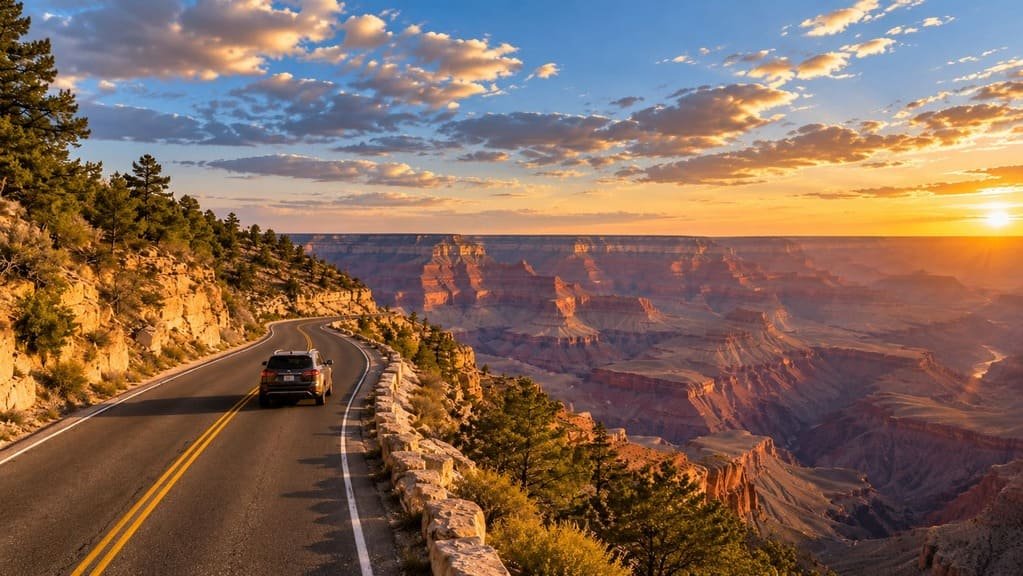
A Grand Canyon road trip isn’t simply a matter of driving to the nearest viewpoint. The South Rim and North Rim offer different access, infrastructure, scenery, and trip logistics, and right now, both are operating under real disruption from two separate events: a 2025 wildfire that reshaped the North Rim, and a severe flash flood in August 2026 that’s still affecting both rims.
Planning a trip here in late 2026 means understanding current conditions before you decide which rim, how many days, and how the canyon fits into a larger Southwest route.
Grand Canyon Road Trip at a Glance
|
Planning factor |
What to know |
|---|---|
|
South Rim |
Open year-round; overnight lodging currently paused due to an August 2026 flash flood |
|
North Rim |
Seasonal, open for 2026 with limited services following a 2025 wildfire |
|
Getting around |
Free shuttle system on the South Rim; private vehicle access varies by road and season |
|
Current major disruption |
An August 29, 2026 flash flood damaged inner-canyon infrastructure and the park’s water system |
|
Best for |
Scenic driving, viewpoints, and a stop within a larger Southwest itinerary |
|
Check before you go |
NPS’s own Grand Canyon status page, given how quickly current conditions are changing |
Current Conditions: Read This Before You Plan Anything Else
Two separate events are shaping any Grand Canyon trip planned in late 2026.
The 2025 Dragon Bravo Fire and the North Rim
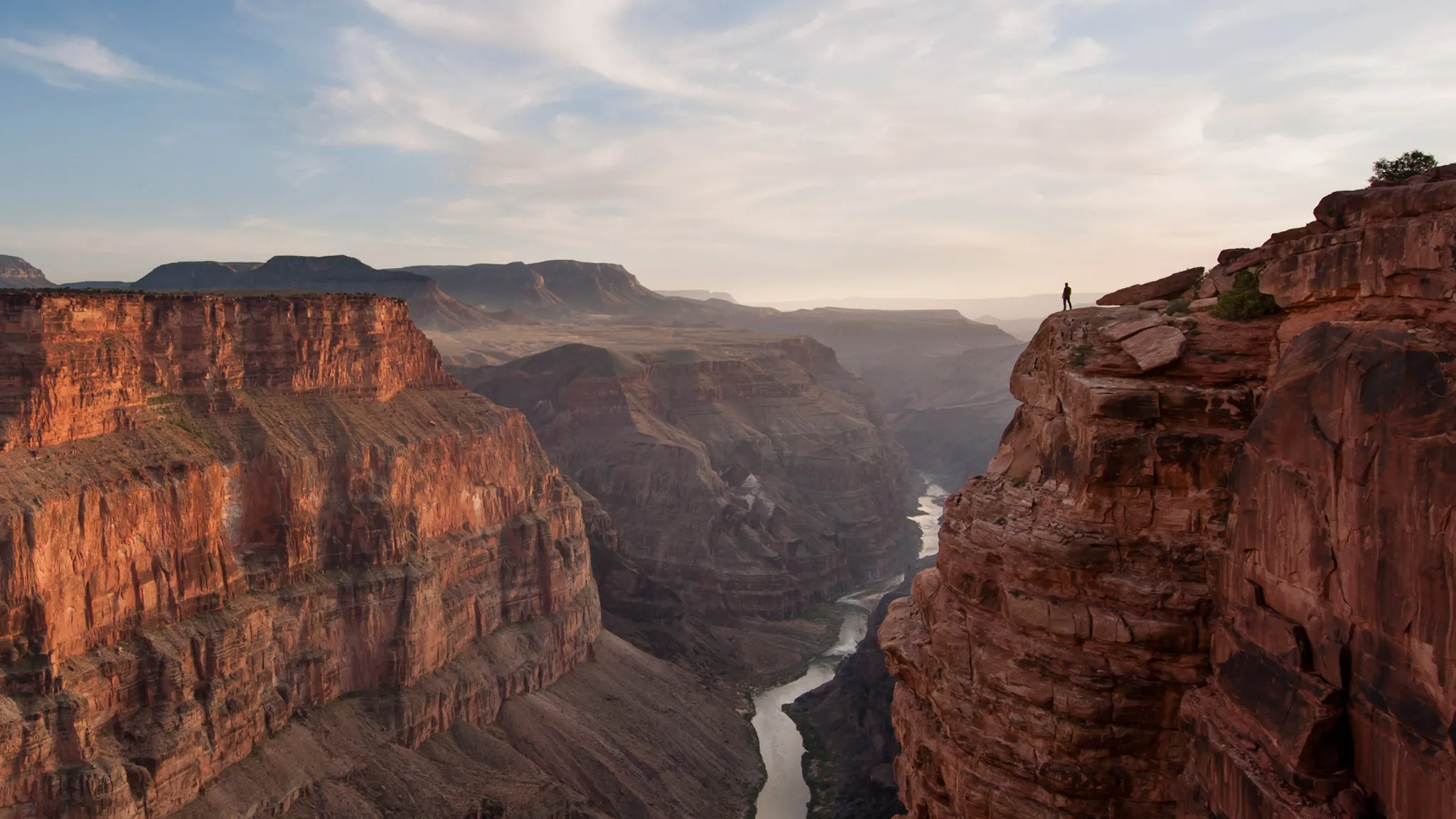
In July 2025, the Dragon Bravo Fire burned more than 145,000 acres and destroyed the historic Grand Canyon Lodge and the North Rim Visitor Center. The North Rim reopened for the 2026 season on May 15 with day access to scenic roads and viewpoints, but there’s no overnight lodging inside the park this season, and the campground, which reopened June 1, has no water or RV hookups. Fuel and limited supplies are available seasonally, but visitors should expect far less than pre-fire service levels.
The August 2026 Flash Flood
On August 29, 2026, a major flash flood tore through Bright Angel Canyon and the Phantom Ranch area — the park’s worst flood since 1966. Two hikers died, and the flood destroyed roughly 40% of the Transcanyon Waterline, the pipeline supplying water throughout the park. As a result, NPS halted overnight lodging at South Rim properties and placed the South Rim under Stage 4 water restrictions. The North Kaibab Trail, Phantom Ranch, and the bridges connecting the two rims remain closed indefinitely, ruling out a rim-to-rim hike for now. No reopening timeline has been announced.
What This Means for Your Trip
The South Rim remains open for day visits and scenic drives, but any plan depending on overnight lodging on either rim needs to change right now. Check NPS’s official Grand Canyon conditions page immediately before you leave, not just while planning.
South Rim vs. North Rim: How to Choose
| Factor | South Rim | North Rim in 2026 |
|---|---|---|
| Operating season | Year-round | Seasonal (typically mid-May to mid-October) |
| Services | Extensive, though currently affected by the August flood | Limited even in normal operation this season |
| In-park lodging | Currently paused due to the flood | Not available this season |
| Water | Available under current restrictions | Not potable on-site |
| Scenic drives | Desert View Drive, Hermit Road | Select scenic roads open |
| Best fit | Easier for a first-time visitor once lodging resumes | Better for travelers comfortable with a more remote, self-sufficient experience |
The South Rim is generally the simpler choice given its year-round access and broader infrastructure, though right now even that infrastructure is dealing with real disruption. The North Rim is a genuinely different proposition in 2026 — recovery work has reduced its services and removed its overnight lodging entirely for the season.
Consider the South Rim If
You want year-round access, more services once lodging resumes, and easier integration into a first Grand Canyon visit.
Consider the North Rim If
Your dates fall within its operating season, you’re comfortable with limited services and no on-site lodging, and you’re prepared to check current conditions right up until departure.
How Many Days Do You Need?
One day: best treated as a focused South Rim visit or an addition to a longer transfer day.
Two days: enough to see the major South Rim viewpoints without treating the canyon as a drive-through stop.
Three days: more room for viewpoints, sunrise and sunset, a short trail, and a less compressed schedule.
Four or more days: useful when the canyon is a major piece of a larger hiking or Southwest-focused itinerary.
The number of days you actually need depends more on what you want to do there than on the size of the canyon itself.
Best South Rim Stops and Scenic Drives
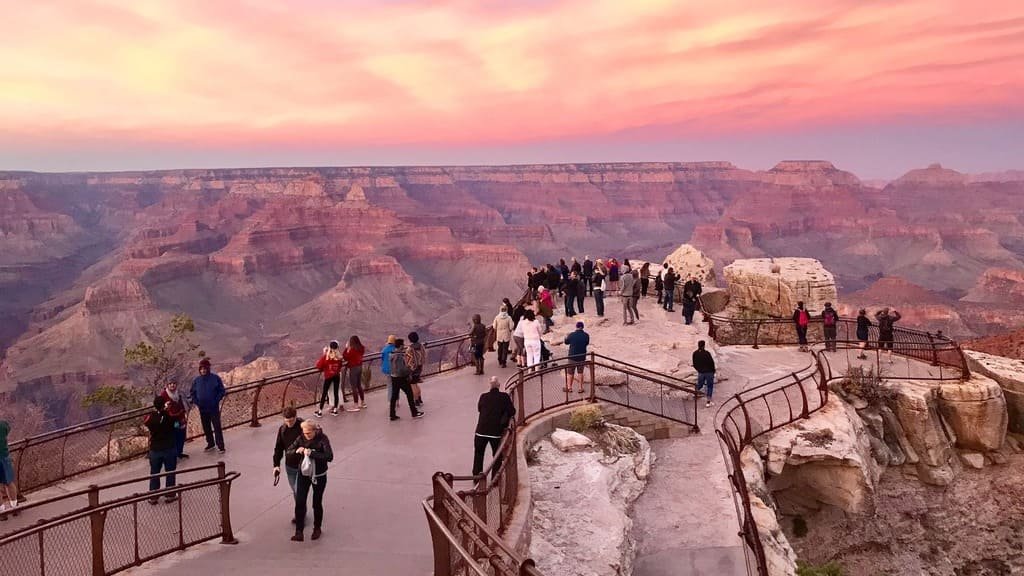
Grand Canyon Village area: Mather Point is typically the first viewpoint most visitors reach, just a short walk from the main visitor center, and it’s a reliable spot for a first look at the canyon regardless of time of day. Yavapai Point, a little further along, has a geology museum built right into the rim with floor-to-ceiling windows looking out over the canyon, and it’s a good stop if you want some context before or after other viewpoints. Both sit close enough to the main village that they work well even on a short visit.
Hermit Road: This seven-mile stretch west of the village is typically accessed by the free shuttle rather than a private vehicle during its restricted season, which usually runs from early March through November. The road passes a string of named viewpoints — Hopi Point and Mohave Point among the best-known — with Hopi Point in particular considered one of the strongest sunset spots on the whole South Rim. Because the shuttle stops at each viewpoint, you can hop off, spend time at one, and catch a later bus rather than committing to a fixed schedule. Check current access rules before assuming you can drive it yourself, since the private-vehicle restriction period can shift.
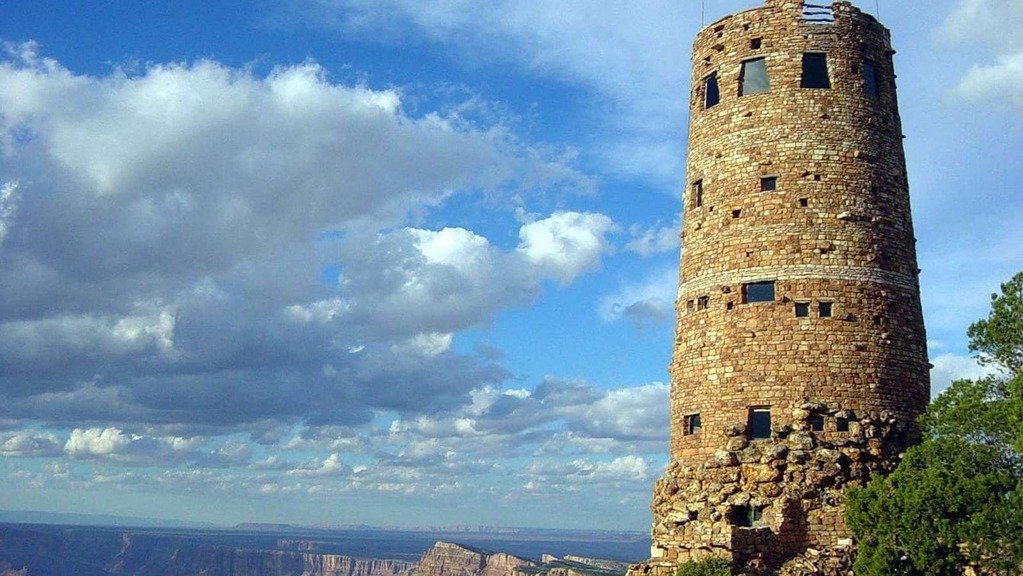
Desert View Drive: A separate 25-mile scenic drive heading east from the village, this one remains open to private vehicles and offers a different rhythm than Hermit Road — fewer crowds, more spread-out stops, and views that shift as you move further from the main village. The drive ends at the Desert View Watchtower, a 70-foot stone structure built in 1932 with panoramic views from the top, and it’s worth treating as a destination in its own right rather than just the last stop on the way out of the park.
Beyond these three areas, the Rim Trail connects many viewpoints on foot for those who’d rather walk between a few close-together stops than drive or shuttle to each one separately.
Getting Around the Grand Canyon
You don’t need to drive to every viewpoint, and in some cases you can’t. The South Rim runs a free shuttle system connecting the village, Hermit Road, and other key areas on several color-coded routes, each running frequently during the day and less often early and late. NPS generally recommends parking once in the village and using the shuttle for the rest of your visit, rather than repeatedly driving out and searching for parking at each viewpoint — parking areas at popular stops fill quickly, especially in summer, and a full lot can cost you more time than the shuttle ride would have.
Some roads have seasonal or permanent private-vehicle restrictions, Hermit Road being the clearest example during its restricted season, so check current rules for whichever section you’re visiting rather than assuming full private access everywhere. Desert View Drive remains open to private vehicles year-round, which makes it a more flexible option if you’d rather drive at your own pace.
Walking is also a real option between closely spaced viewpoints along the Rim Trail, which runs along much of the South Rim and lets you cover several stops without moving the car at all. Whichever combination you use, build in more time than the driving distance alone suggests — between parking, shuttle waits, and the walk from a shuttle stop to the actual viewpoint, getting from one stop to the next often takes longer than it looks on a map.
Building the Grand Canyon Into a Southwest Road Trip
Las Vegas: A common gateway given its major airport and roughly four-and-a-half-hour drive to the South Rim, making it easy to combine the canyon with a broader Nevada-Arizona route. Many travelers add a stop at Hoover Dam along the way, which sits almost directly on the drive between the two.
Sedona: A natural pairing given the relatively short drive between the two, and a strong contrast in scenery — red-rock formations and a much smaller-scale landscape compared to the canyon itself, making it a good change of pace on a multi-stop trip.
Utah’s Mighty 5: See our Utah Mighty 5 guide for combining the canyon with a longer Southwest national park circuit — Zion in particular sits close enough that many travelers link the two parks into one continuous route.
A Southwest loop: Combining several major destinations — the canyon, Utah’s parks, Las Vegas, Sedona, or even Monument Valley — works well with enough time, but resist stacking too many famous stops into too few days. Each of these destinations rewards more than a drive-through visit, and an itinerary built around checking off names rather than allowing real time at each one tends to leave everyone feeling rushed rather than satisfied.
Don’t measure a Grand Canyon day by driving miles alone. A nominally short day around the park — driving, parking, a shuttle ride, a viewpoint, some walking, the heat and elevation, a meal, and a sunset stop — can take up more time and energy than a much longer highway transfer day would. The same logic applies across a multi-stop Southwest trip: the driving distance between destinations is often the easiest part of the day to plan around, and the time spent actually experiencing each stop is what most itineraries underestimate.
Best Time to Visit
South Rim: open year-round, so the real choice is between summer’s heat and crowds, spring and fall’s more moderate weather, and winter’s cold but quieter visit — each with its own tradeoffs rather than one clear “best” month.
North Rim: operates on a seasonal schedule, typically mid-May to mid-October in a normal year, and 2026’s post-fire conditions add another layer of timing considerations on top of the usual season.
Where to Stay
South Rim: Grand Canyon Village lodging is currently paused due to the August flood — confirm current booking status directly before assuming a reservation will hold. Tusayan, just outside the park, is a practical alternative.
North Rim: no in-park overnight lodging is available for the 2026 season at all, following the 2025 fire.
Gateway towns: Williams and Flagstaff on the south side, and Kanab or Jacob Lake on the north side, both work as bases while in-park lodging is unavailable or unsuitable for your trip.
What to Prepare Before You Go
Check NPS’s official Grand Canyon conditions page immediately before departure, not just while planning. Bring more water than you’d normally expect to need, since services are more limited than usual on both rims right now. Pack layers for the elevation swing between the rim and the inner canyon, and don’t plan a hike below the rim without checking current trail status first, given how many inner-canyon trails are currently closed. Confirm any lodging reservation directly with the property rather than assuming it’s unaffected.
Who Is This Road Trip Best For
This suits scenic-drive travelers, first-time visitors focused on rim viewpoints rather than an inner-canyon hike, and anyone building the canyon into a larger Southwest trip. It’s a harder fit right now for anyone planning an inner-canyon hike, a rim-to-rim crossing, or a trip entirely dependent on in-park lodging, given the current closures on both fronts.
Common Mistakes
- Assuming the North Rim operates like it did before 2025.
- Assuming the South Rim is unaffected by anything and skipping a current-conditions check.
- Assuming “open” means every trail and facility within the park is open.
- Treating the canyon as a quick viewpoint stop rather than budgeting real time for parking and shuttles.
- Planning an inner-canyon hike without checking current trail and bridge closures.
- Trying to combine too many Southwest destinations into too few days.
- Failing to check NPS conditions again right before departure, given how recently things have changed.
FAQs
Is the Grand Canyon North Rim open in 2026? Yes, it reopened May 15, 2026 for day access following the 2025 Dragon Bravo Fire, but there’s no overnight lodging inside the park this season, and services are limited.
Is the Grand Canyon open after the August 2026 flash flood? Yes, the park remains open and the South Rim is accessible year-round, but overnight lodging is currently paused and several inner-canyon trails and bridges remain closed with no announced reopening date.
Can you still hike rim to rim? Not currently. The North Kaibab Trail and the bridges connecting the two rims are closed following the August 2026 flood, making a continuous rim-to-rim hike impossible for now.
How many days do you need for a Grand Canyon road trip? One to two days covers the main South Rim viewpoints. Three or more days gives you room for a less rushed schedule or a role within a bigger Southwest itinerary.
Which rim should I visit, South or North? The South Rim is generally simpler given year-round access, though check current lodging status given the recent flood. The North Rim is a more remote, limited-services option this season, only available within its seasonal window.
Do I need a car to get around inside the park? You’ll want one to reach the park, but the South Rim’s free shuttle system covers much of the village area and Hermit Road, and NPS generally recommends parking once rather than repeatedly driving between viewpoints.
PLAN YOUR TRIP YOUR WAY
Build a day-by-day itinerary around your time, pace, interests, and budget.
Use our planner to work the Grand Canyon into a broader Southwest itinerary, built around your available days and current park conditions.
1 thought on “Grand Canyon Road Trip: South Rim, North Rim & Itineraries”