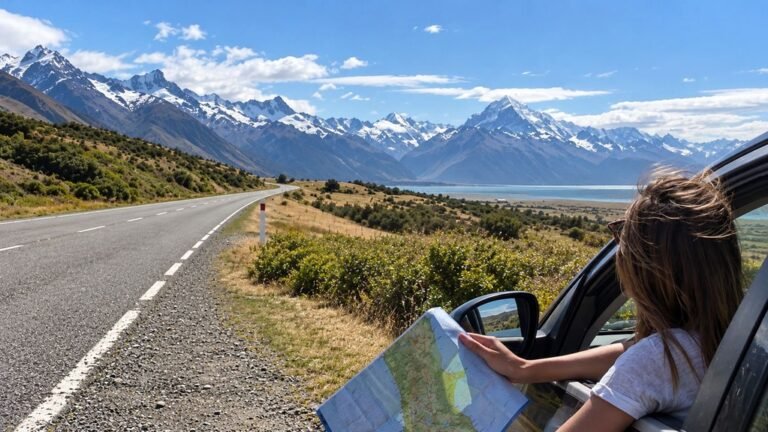
A solo road trip isn’t a shared road trip with one fewer passenger. It has to be planned differently, because there’s no second driver to take over when you’re tired, no one else to check the map, and no backup decision-maker if something goes wrong. You’re also the only one who decides where to stop, how long to stay, and when to change the plan entirely.
That trade-off cuts both ways. You get full control over the schedule and never have to compromise on a stop you want to make. You also carry the entire workload — driving, navigating, fueling up, and handling whatever comes up — by yourself. Planning around that reality, rather than just scaling down a group itinerary, is what makes a solo trip work.
Quick Facts
| Planning Factor | Solo Road Trip Guidance |
|---|---|
| Daily driving | Plan by hours and Trip Load, not a fixed mileage number |
| Breaks | More frequent than you’d take with a co-driver |
| Overnight decisions | Stop before fatigue sets in, not after |
| Check-ins | A simple scheduled message, not constant location-sharing |
| Route (first trip) | Favor well-serviced roads over remote ones |
| Emergency prep | Higher priority — there’s no one else in the car |
| Budget | No cost-splitting on rooms, rentals, or fuel |
How Solo Driving Changes Your Daily Mileage
A 400-mile day isn’t the same experience for a solo driver as it is for two people sharing the wheel. Miles alone don’t tell you much — a highway day at steady speed is a different kind of tiring than a mountain day full of curves, viewpoints, and parking. That’s the same “miles aren’t hours” idea behind our guide to how many miles you should drive in a day, extended to a driver who has no one to hand the wheel to.
Solo Trip Load
On a shared trip, driving, navigating, and decision-making split between two people. Solo, all of it lands on one person: watching the road, choosing the next stop, tracking fuel, checking reservations, and handling anything unexpected. That’s a heavier Trip Load for the same number of miles, which is why your planning buffer should be larger than it would be for a shared trip covering the same route.
What the Fatigue Research Actually Supports
Research cited by AAA Foundation material indicates that significant sleep deprivation can produce impairment comparable to alcohol intoxication. That doesn’t set a mileage limit, but it matters more for a solo driver specifically, since there’s no second driver to take over once fatigue shows up. The practical takeaway isn’t a number — it’s that fatigue on a solo trip has nowhere to go but into your driving.
Practical Planning Ranges (Not Safety Limits)
These are starting points to plan around, not thresholds you’re safe up to and unsafe past. Road type, weather, traffic, and how well you slept the night before all matter more than the number itself.
| Day Type | Approximate Range |
|---|---|
| Relaxed solo day | 150–250 miles |
| Balanced solo day | 250–350 miles |
| Long-distance day | 350–450 miles |
| Very long day | 450+ miles |
A shorter mountain or coastal day can be more demanding than a longer interstate one. Use these ranges as a planning starting point, then adjust based on the actual road.

Choosing a Route for Your First Solo Trip
Don’t make your first solo road trip unnecessarily complicated. A first solo trip is a good time to reduce logistical uncertainty while you learn your own pace, not to prove you can handle the most remote route available. Favor roads with reliable fuel stops, regular towns, reasonable cell coverage, available lodging, and more than one way to bail out if you need to change plans. None of that rules out a remote route later, once you know how you actually handle a full day of solo driving.
Loop vs. One-Way
A loop returns you to your starting point, which simplifies vehicle logistics and gives you a familiar endpoint — the trade-off is that a loop can add mileage a one-way route wouldn’t need. A one-way route covers more geographic ground efficiently, but usually means arranging a rental drop-off or return transportation, which adds cost and planning. For a first solo trip, a loop is usually the simpler choice.
Budgeting a Solo Road Trip
The biggest budget difference between a solo and shared trip is that fixed costs don’t split. A $150 hotel room costs $150 for one traveler and $75 each for two — accommodation is where solo trips get noticeably more expensive per person, not fuel. The same logic applies to a rental car, tolls, and parking. Food, activities, and park fees scale more evenly since they’re already close to per-person costs on a shared trip.
Build in an emergency buffer specifically because there’s no one else to cover a shortfall or split an unexpected cost, like a tow or a same-day hotel change.
Safety and Check-Ins
Before You Leave
Tell someone your general route and where you plan to stay each night. Keep emergency contacts somewhere accessible without your phone. Get the car checked over — fluids, tires, and anything you’ve been putting off — before you’re relying on it alone. Download offline maps for stretches where cell coverage might drop.
During the Trip
A simple check-in system works better than constant location-sharing: “I’ll message you when I get to tonight’s stop.” That’s easy to keep up daily and gives someone a clear signal if they don’t hear from you. Sharing live location is a reasonable option if you want the extra reassurance, but it isn’t necessary to travel safely alone.
If Something Feels Wrong
If you’re uncomfortable with a road, the weather, your own fatigue, a mechanical noise, or where you’re about to spend the night, stop and reassess rather than pushing through. Pull into a public, well-lit location, contact roadside assistance if needed, change the route, book a different place to stay, or shorten the day. The itinerary is adjustable. It was never more important than getting there safely.
Sleeping and Fatigue Management
Set a stopping rule before you leave, and follow it even if it means falling behind schedule. If you’re fighting sleep, losing concentration, missing turns, yawning repeatedly, or can’t clearly remember the last several miles, the driving day is over — not in twenty more minutes. Coffee and other caffeine can help with mild tiredness, but it isn’t a substitute for actual sleep once real fatigue sets in, and treating it as one is exactly how “just a little further” turns into a bad decision.
What to Pack Differently When Traveling Solo
Rather than duplicating a full packing list, focus on what reduces your dependence on other people if something goes wrong: a power bank, offline maps, a basic emergency kit, extra water and snacks, first-aid supplies, a spare charging cable, and your important documents and emergency contacts somewhere easy to find. For the rest of what to bring, see our full road trip packing list.
Staying Entertained Without Getting Distracted
Entertainment should fill the time between driving tasks, not compete with them. Podcasts, audiobooks, and downloaded playlists work well for long stretches, and a scenic stop is a better outlet for restlessness than reaching for your phone at the wheel. Load content before you leave rather than relying on a signal you might not have.
Eating Alone on the Road
You don’t need to schedule every meal around a sit-down restaurant. Keep snacks within reach, use cafés and diners when you want a real break, and pack simple food for stretches where stopping isn’t convenient. Eat at a scenic pull-off when the timing works out — just don’t eat while you’re driving.
Who Solo Road-Tripping Fits
A solo trip tends to suit travelers who value independence, a flexible schedule, photography, hiking, slow travel, or simply having stops entirely on their own terms. A shared trip may be the better fit for someone who doesn’t enjoy long stretches alone, finds driving stressful, wants to split the driving, or would rather not handle a vehicle problem solo. Neither is the better road trip — it’s a question of fit.
Common Mistakes
- Planning a shared-driver mileage range for a solo trip.
- Booking every night around an overly aggressive itinerary.
- Continuing to drive after real fatigue has set in.
- Choosing an unnecessarily remote route for a first solo trip.
- Forgetting that all navigation and decisions fall on one person.
- Having no backup plan when weather or road conditions change.
- Underestimating solo accommodation costs.
- Not telling anyone your route or plans before leaving.
FAQs
Is solo road tripping safe? It can be, with the same kind of preparation any road trip needs plus a few solo-specific steps: telling someone your plans, checking in regularly, and having a clear rule for when to stop driving.
How many miles should you drive alone in a day? There’s no universal safety limit. Hours behind the wheel, sleep quality, road type, and overall Trip Load matter more than a mileage number — treat any range as a planning starting point, not a limit.
Is a solo road trip good for beginners? Yes, especially if you choose a well-serviced first route rather than a remote one, and build in more buffer time than you think you need.
How do you stay safe on a solo road trip? Share your route and lodging plans before you leave, set up a simple daily check-in, keep the car in good shape, and have a plan for if something feels wrong along the way.
How do you avoid getting tired while driving alone? Sleep well before you start, take breaks more often than you would with a co-driver, and set a firm stopping rule for real fatigue rather than relying on caffeine to push through it.
How much does a solo road trip cost? Costs that split on a shared trip — rooms, rentals, tolls — fall entirely on one traveler solo, which usually makes accommodation the biggest per-person cost difference. Food and activity costs scale more evenly either way.
What should I pack for a solo road trip? The essentials that reduce your dependence on anyone else if something goes wrong — a power bank, offline maps, an emergency kit, and your documents somewhere accessible — on top of the general road trip packing list.
PLAN YOUR TRIP YOUR WAY
Build a day-by-day itinerary around your time, pace, interests, and budget.
Traveling alone changes how a route should be paced. Tell our planner how many days you have, how much driving you’re comfortable with, what you want to see, and whether you’d rather loop back or go one-way, and it’ll help you build a route around your actual limits.