

A road trip with a baby or toddler can sound exciting when you picture the destination, but the reality often begins with a packed car, a sleepy child, too many bags, and the question every parent quietly asks: “Are we really going to make it there without losing our minds?” Feeding, diaper changes, car-seat time, naps, snacks, and those completely unpredictable “we need to stop right now” moments can quickly turn a simple road trip into a very different kind of adventure.
The good news is that you don’t have to give up road trips just because you have a little one — you just need to slow the pace, lower the expectations, and plan the journey around what your child actually needs.
Road Trip With a Baby or Toddler: At a Glance
| Planning factor | Practical approach |
|---|---|
| Car seat | Use the appropriate restraint and follow its installation and instruction requirements exactly |
| Rear-facing | Keep your child rear-facing as long as possible, within your seat’s height and weight limits |
| Breaks | Plan regular out-of-seat breaks appropriate to your child’s age and needs |
| Daily driving | Build a shorter, more flexible day than you would for an adult-only trip |
| Feeding | Keep familiar feeding routines where practical |
| Sleep | Use your child’s normal sleep pattern as one input to timing, not the whole plan |
| Route | Favor reliable services, easy stops, and flexible lodging over the most scenic option |
How Age Changes the Road Trip
Newborn
Frequent feeding, diaper changes, more frequent breaks, and unpredictable sleep all shape the day, along with real sensitivity to schedule disruption — and often, real sleep deprivation on the parents’ side too. This is the stage where the shortest, most flexible plan tends to work best.
Mobile Infant
The challenge shifts toward longer stretches of wakefulness, a growing need to move, and keeping a more alert baby entertained and fed through the day, with breaks that involve more than just a diaper change.
Toddler
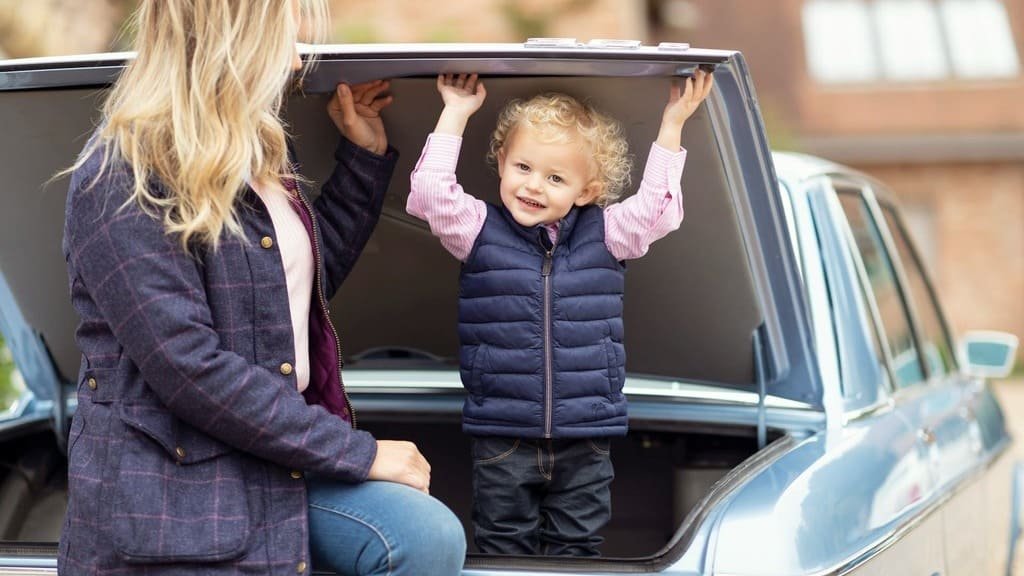
Now you’re dealing with real preferences, boredom, a strong need to move, snack timing, unpredictable moods, and stops that take longer because a toddler is walking rather than being carried. The same 300-mile route can be a completely different trip with a newborn versus a two-year-old, and it’s worth planning as though it is.
Car Seat Basics for a Road Trip
Keep your child rear-facing for as long as possible, within the height and weight limits printed on your specific seat — that’s the current guidance from the American Academy of Pediatrics, NHTSA, and the Insurance Institute for Highway Safety, and it isn’t tied to a fixed birthday. Most convertible seats allow rear-facing well past age two. Make sure the seat is installed correctly for your vehicle, following both the seat’s instructions and your vehicle’s manual, and never place a rear-facing seat in a front seat with an active passenger airbag.
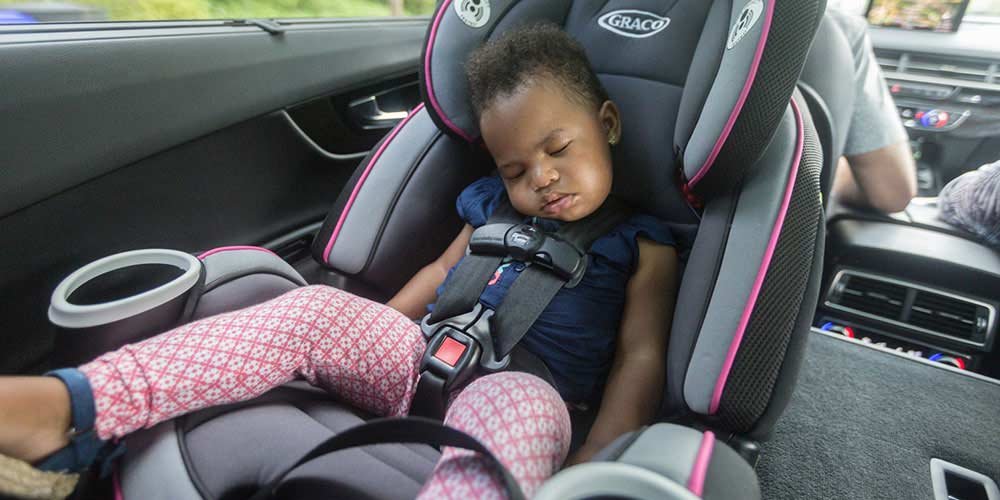
Plan regular breaks so your child can be taken out of the car seat rather than treating it as a place for prolonged, uninterrupted sleep. This matters most for young infants: AAP guidance on the safe transportation of newborns notes that the semi-reclined position car seats require can affect a very young baby’s airway position, which is part of why car seats are designed for vehicle travel specifically rather than extended use outside the car. The right break frequency depends on your child’s age and circumstances rather than one universal number, though many pediatric sources suggest checking in and offering a break roughly every couple of hours on a long road trip, more often for younger infants.
And never leave a child unattended in a parked vehicle, at any age, for any length of time.
How Often Should You Stop With a Baby?
Feeding and diaper needs will largely set your stop rhythm for an infant, and it’s easier to build the road trip around that rhythm than to fight it. For a mobile infant or toddler, add in stretching and movement breaks — time out of the seat matters as much as the diaper change itself. Treat these stops as a normal part of the day’s plan rather than an interruption to it.
How Long Should You Drive Each Day?
A short day suits a first trip, a younger infant, or any situation where you don’t yet know how your child handles car travel.
A moderate day becomes realistic once you have some experience with how your specific child manages the car.
A longer transfer day should be used sparingly, and only once you have a reasonable sense that your route, your child, and you as parents can actually tolerate it.
Plan the day around total travel time, not just miles — the same logic behind our guide to how many miles you should drive in a day applies here, just with a heavier Family Trip Load added on top. A 250-mile day can look easy on a map, but the real day includes driving, feeding, diaper changes, parking, getting everyone out and back in, meals, naps, and whatever unexpected stop comes up. The more tasks each stop requires, the less the raw mileage tells you about how the day will actually feel.
How to Time the Drive Around Sleep
Nap-timed departures mean leaving around your child’s normal sleep period and using that window for a longer uninterrupted stretch of driving.
Normal-day travel means driving during regular waking hours and accepting more frequent stops as part of the trade.
Both are legitimate strategies, and neither is automatically better. Driving overnight to take advantage of a sleeping baby only makes sense if the parents doing the driving aren’t already worn down from their own sleep loss — trading your own rest for the chance the baby sleeps isn’t necessarily a good trade if you’re the one behind the wheel.
Choosing a Baby- or Toddler-Friendly Route
Look for frequent restroom access, reliable food options, regular fuel stations, reasonable cell service, medical facilities within reach on longer stretches, easy parking, short walks from parking to whatever you’re stopping for, and flexible lodging that doesn’t lock you into a rigid arrival time. Scenic shouldn’t be the only consideration — a spectacular but remote road with a hundred miles between services may be a worse fit for a first trip with a baby than a less dramatic route with services every few miles.
Taking Your First Road Trip With a Baby?
Start smaller than you think you need to. Pick a destination relatively close to home, with flexible accommodation, plenty of services along the way, and an easy path back if things don’t go well. You can build up to longer, more ambitious routes once you have a better sense of how your child travels.
What to Pack for a Baby or Toddler Road Trip
Beyond the essentials in our full road trip packing list, bring diapers and wipes, changing supplies, feeding supplies, extra clothes, a comfort item your child already knows, age-appropriate entertainment, any medications or health supplies you use regularly, and everything the car seat itself needs. Pack more backup than feels necessary — spills, diaper blowouts, and forgotten items are the norm, not the exception, with a baby or toddler along.
Keeping a Toddler Entertained
Books, familiar soft toys, music, audio stories, simple games, plain conversation, and screens where you choose to use them all work. There’s no single right answer here, and the actual safety requirement isn’t about which entertainment method you pick — it’s making sure the driver stays focused on driving rather than managing the entertainment themselves.
Planning by Trip Length
Day trip: car seat, feeding and diaper supplies, a couple of planned breaks, and entertainment cover most of it.
Weekend: add baby-friendly lodging, a sleep setup your child recognizes, extra clothes and supplies, and a bit more flexibility in the schedule.
Multi-day road trip: add supply restocking along the way, multiple lodging stops chosen for flexibility, a real buffer for bad days, and lower expectations for how much ground you’ll cover per day than you’d plan for adults alone.
What to Do When the Plan Falls Apart
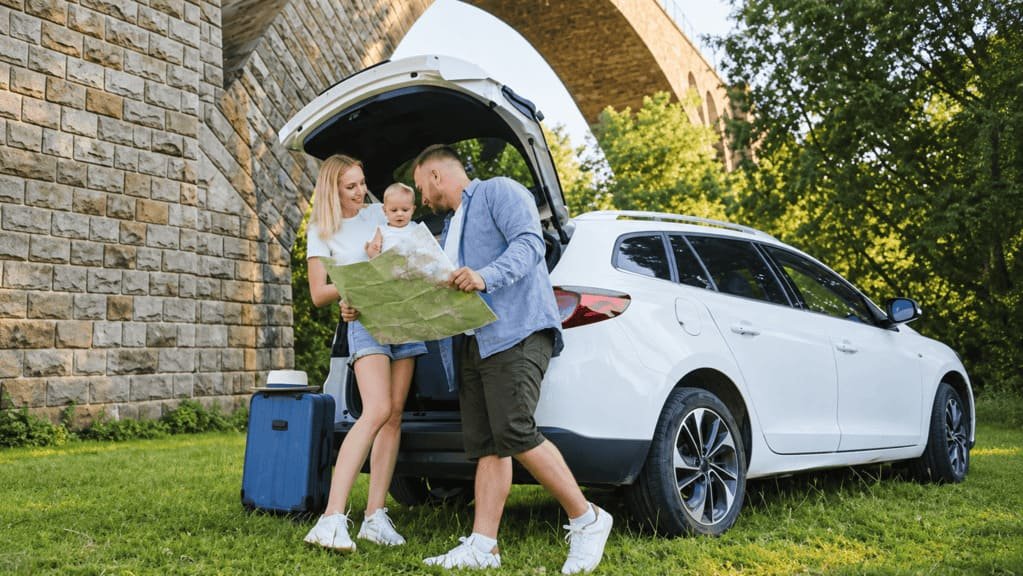
Build a recovery plan into the itinerary itself. If your child won’t sleep, needs an unexpected feeding, gets carsick, becomes inconsolable, or needs a longer break than planned, the schedule needs somewhere to absorb that. One flexible stop or half-day, a realistic arrival buffer, and an optional attraction you can skip without real cost all help. An itinerary where every single stop is time-sensitive is an itinerary built to fail on a hard day.
Who Should Take a Baby or Toddler on a Road Trip?
A road trip may not be the right call yet if your child is medically complex and travel hasn’t been cleared by their healthcare provider, if the parents are severely sleep-deprived, if the route requires very long uninterrupted driving with few places to stop, or if everyone would genuinely be more comfortable with something shorter this time around. A day trip, then a nearby overnight, then a longer road trip is a reasonable progression rather than starting with the most ambitious version first.
Common Mistakes
- Planning adult-paced daily mileage for a trip with a baby or toddler along.
- Skipping proper car seat installation checks before a long road trip.
- Assuming overnight driving is automatically the better strategy without accounting for parent fatigue.
- Choosing a scenic but service-sparse route for a first trip with a young child.
- Packing single quantities of anything that’s likely to run out or get ruined.
- Building an itinerary with no flexibility for a bad day.
- Ignoring how differently a newborn, an infant, and a toddler each experience the same drive.
FAQs
How often should you stop on a road trip with a baby? Stop rhythm is largely set by feeding and diaper needs for an infant, with added stretching breaks for a mobile infant or toddler — there’s no single fixed interval that fits every age and situation.
Is it safe to drive long distances with a newborn? It can be, with regular breaks and attention to how your baby is doing rather than pushing through on a fixed schedule. If your baby is medically complex, check with your pediatrician before planning a long trip.
When can you turn a car seat forward-facing? Current AAP and NHTSA guidance is to keep a child rear-facing as long as possible, until they reach their specific seat’s height or weight limit, rather than switching at a fixed age.
Is it better to drive overnight with a baby? It can help if your baby sleeps well in the car, but it only makes sense if the parents driving aren’t already sleep-deprived themselves — trading your own rest for a chance the baby sleeps isn’t automatically a good trade.
What should I pack for a road trip with a toddler? Beyond general road trip essentials, bring diapers and feeding supplies, extra clothes, a familiar comfort item, entertainment, and more backup of everything than you think you’ll need.
How long should a first road trip with a baby be? Shorter than you might plan otherwise, and closer to home, with flexible lodging and an easy way back if things don’t go well — you can build up to longer trips once you know how your child travels.
PLAN YOUR TRIP YOUR WAY
Build a day-by-day itinerary around your time, pace, interests, and budget.
Use our trip planner to build a route around your child’s age, your comfortable driving pace, and the flexibility your family actually needs.