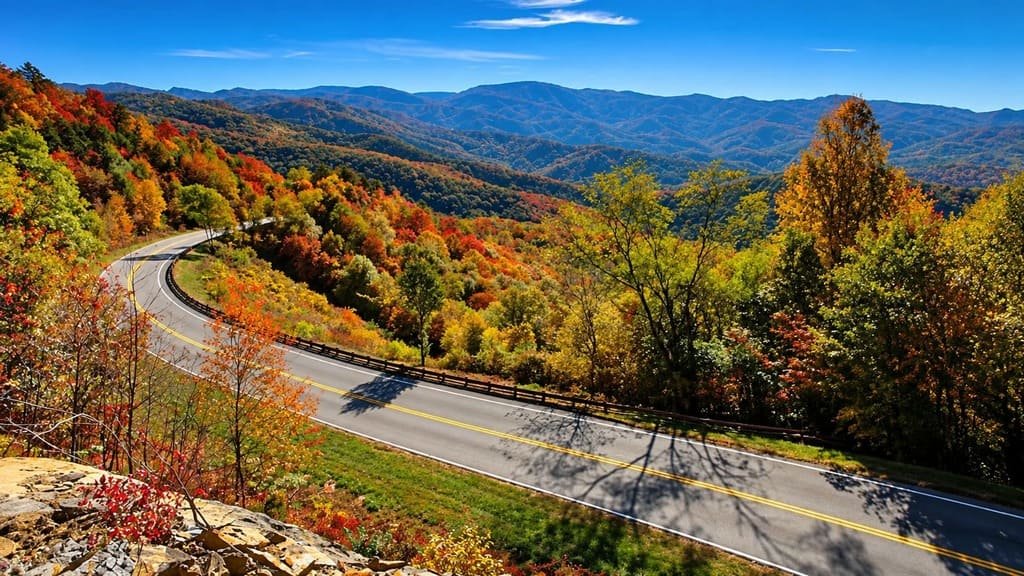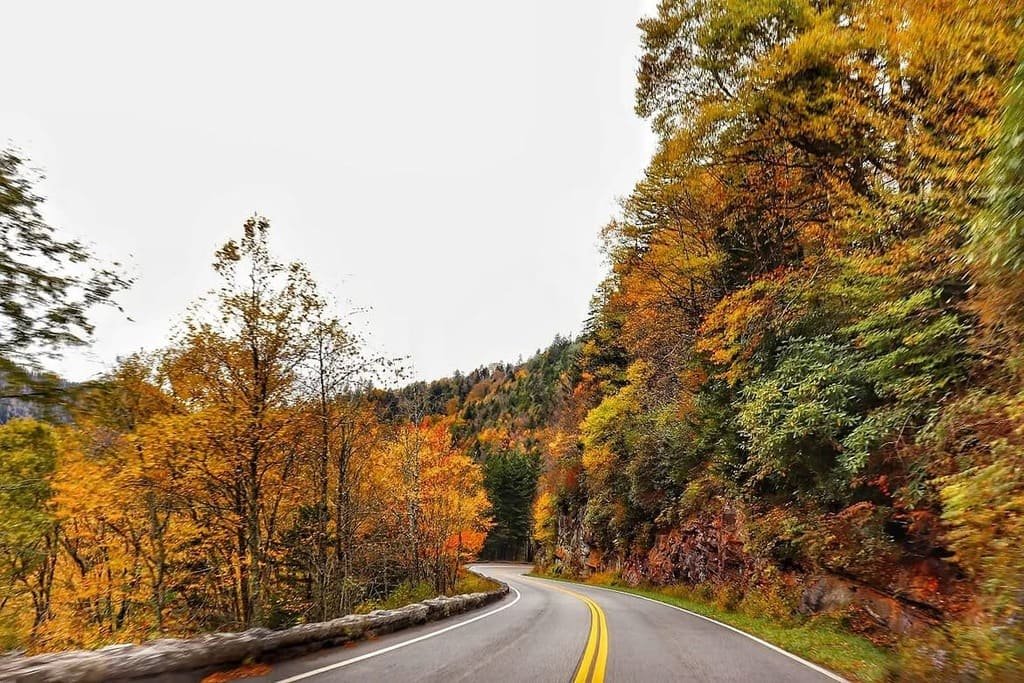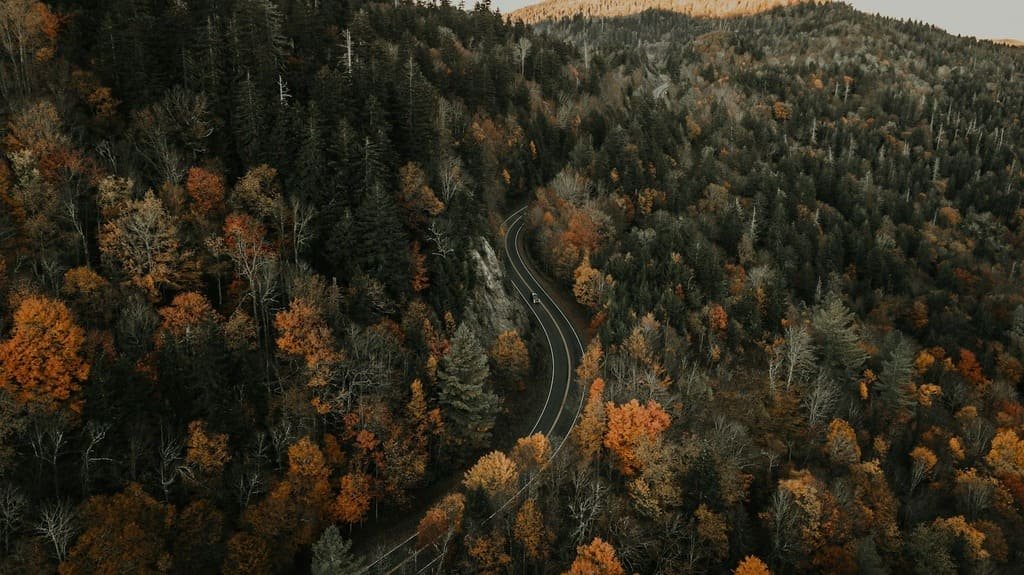
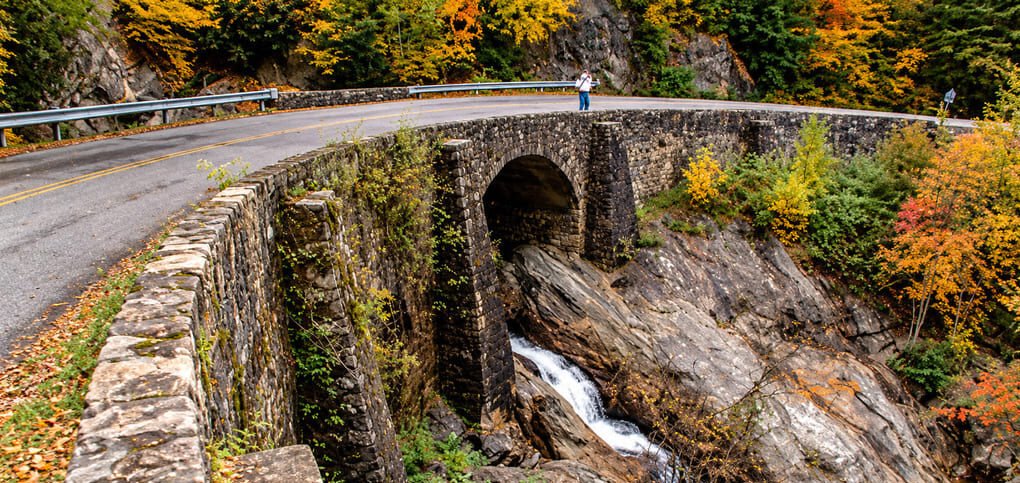
The Forest Heritage National Scenic Byway loops 76 miles through Pisgah National Forest, crossing the Blue Ridge Parkway twice between Waynesville and Brevard in western North Carolina.
The forest itself has a specific origin story. George Vanderbilt assembled the land as part of his Biltmore Estate, and after his death, his widow sold roughly 87,000 acres to the federal government. That 1912 purchase, the first national forest land bought east of the Mississippi, became Pisgah National Forest in 1916. Before the sale, logger Louis Carr had bought the timber rights and built rail lines along the creeks to haul it out, and those old rail cuts now form parts of the byway itself.
The U.S. Forest Service designated the route in 1989, and North Carolina followed with its own state scenic byway designation a year later. The drive passes mountain peaks over 6,000 feet, multiple waterfalls, and the Cradle of Forestry in America, a 6,500-acre site set aside in 1968 to honor the country’s first forestry school.
It’s a loop built for a full day of stopping rather than a fast drive, with enough hiking trails, swimming holes, and historic sites to fill far more time than the mileage alone suggests.
Route Details: Forest Heritage National Scenic Byway
Waynesville (0 miles)
The loop begins in Waynesville, which has the drive’s best services and charging. From downtown, US 276 East leads to the small community of Bethel before entering Pisgah National Forest in earnest.
Pisgah National Forest entrance (17 miles)
Twin stone columns, built to honor Transylvania County residents who served in World War I, mark one historic entrance to the forest along US 276. It’s a fitting gateway into the rest of the drive, which follows old settlement roads and logging railroad grades for much of its length.
Looking Glass Falls and Looking Glass Rock (22 miles)
Looking Glass Falls drops right alongside the road, one of the most accessible waterfalls on the byway. Nearby, the trailhead for Looking Glass Rock leads to a challenging 6.5-mile round-trip hike with sweeping views from the granite dome at the top.
Sliding Rock (24 miles)
Sliding Rock is a natural 60-foot rock slide that drops swimmers into a cold mountain pool below, one of the most popular recreation stops in the entire national forest. It has a small fee and a lifeguard on duty during summer months.
Pisgah Center for Wildlife Education and Cradle of Forestry (26 miles)
The Pisgah Center for Wildlife Education includes a fish hatchery open to visitors, and nearby, the Cradle of Forestry in America preserves historic buildings, a steam logging engine, and exhibits from the country’s first forestry school, founded by Dr. Carl Schenck on land once part of the Biltmore Estate.
Pink Beds and the Blue Ridge Parkway crossing (30 miles)
The byway passes through the Pink Beds, a high mountain valley named for the native rhododendron and mountain laurel that bloom there each summer, before crossing under the Blue Ridge Parkway. This crossing links the byway directly to one of the country’s most famous scenic drives.
Rosman and the US 64/NC 215 junction (45 miles)
US 276 ends at Rosman, where the loop picks up US 64 before turning north onto NC 215 to complete the circuit. Rosman marks the transition from the forest’s southern stretch back toward the mountains on the return leg.
NC 215 and Lake Logan (60 miles)
Heading north on NC 215, the byway passes near Lake Logan, a reservoir surrounded by forest that offers a quieter counterpoint to the more heavily visited waterfalls earlier in the drive. This stretch has long, twisting descents as the road winds back down from higher elevation.
Back to Bethel and Waynesville (76 miles)
NC 215 rejoins US 276 near Bethel, closing the loop back toward Waynesville. A roadside waterfall just before the final junction is a popular last stop before the drive returns to its starting point.
Use the trip planner to build a day-by-day itinerary based on your available time and starting point.