
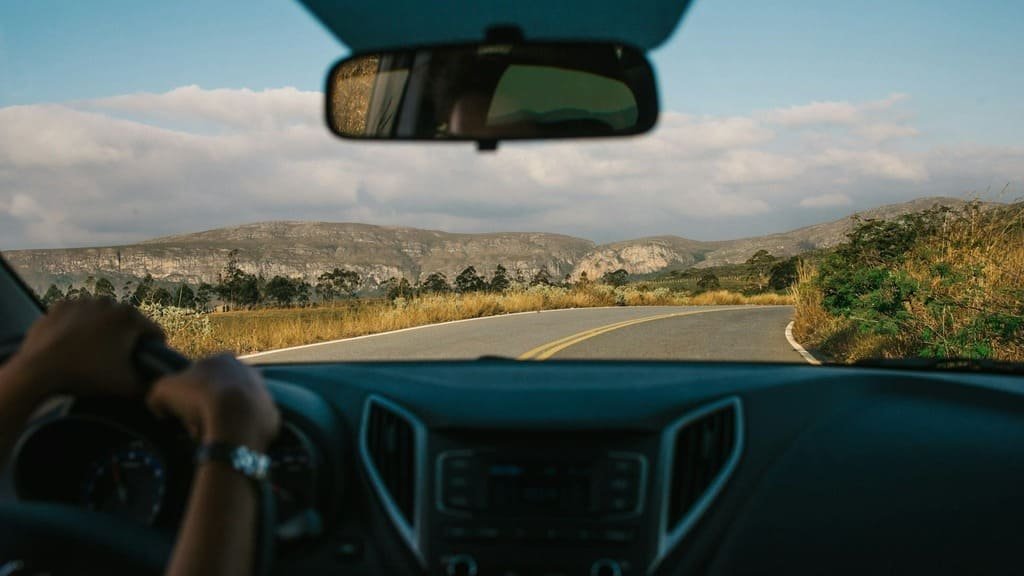
There’s no universal safe mileage number for a road trip day. For planning purposes, 300–500 miles works well on highway-heavy days, but scenic roads, traffic, stops, weather, and fatigue can make a much shorter distance feel just as demanding. The better approach: decide how many hours you actually want to spend driving, then adjust for road type, stops, and conditions — and let the mileage fall out of that, not the other way around.
| Trip Style | Practical Planning Range |
|---|---|
| Relaxed/scenic | 150–250 miles |
| Balanced road trip | 250–400 miles |
| Distance-focused highway day | 400–500+ miles |
| RV / towing | 200–300 miles |
| Family road trip | 200–350 miles |
These are planning ranges, not safety limits. Your realistic mileage depends on road conditions, traffic, stops, weather, terrain, vehicle, and driver fatigue — all covered below.
The Real Limit Is Hours, Not Miles
Planning by mileage alone is where most “we’re behind schedule” moments come from. Two days can both be 400 miles and feel completely different: one on flat interstate at 65 mph, the other winding through mountains at 35 mph with stops every twenty minutes.
The better starting question isn’t “how many miles can I drive?” It’s “how many hours do I realistically want to spend behind the wheel?” — then work outward from there: road type, traffic, stops, weather, terrain, vehicle, number of drivers, trip purpose, fatigue, and where you’ll actually sleep that night.
Why 300 Miles Can Feel Longer Than 500
A 300-mile day through a national park with five stops, a hike, and a lunch break can take longer — and feel more tiring — than a 500-mile interstate day with two gas stops. Distance alone doesn’t predict how demanding a day will be; what happens along the way does.
A Simple Formula for Your Own Daily Max
Plan in this order — available time, then stops, then realistic speed, then mileage, then where you’ll sleep. Not: pick a destination, check Google Maps, and hope the day fits.
- Decide how much driving time you actually want, not the maximum you could physically tolerate.
- Add time for stops — fuel, food, viewpoints, photos, bathroom breaks. These are part of the day, not a buffer to skip if running late.
- Estimate your realistic average speed for the specific roads you’ll be on, not the posted speed limit. These are illustrative planning assumptions, not universal averages: interstate driving might average 55–65 mph once stops are factored in; mountain or coastal roads can drop to 25–40 mph.
- Multiply your driving hours by that average speed to get a realistic mileage — not a bare Google Maps drive-time estimate, which assumes no stops and steady speed.
A day budgeted at 6 hours of driving at a 60 mph average lands around 360 miles. The same 6 hours on a route averaging 30–35 mph — Big Sur, a national park scenic drive — covers closer to 200 miles.
How Much Should You Drive, Based on Your Trip Style?
These are starting points, not rules — your specific route and how you feel that day matter more than any fixed number.
- Scenic / sightseeing days: 150–250 miles is common when stops are frequent. Targeting 400+ miles on a day with five planned stops usually means rushing them or arriving after dark.
- Highway-focused days: 400–500+ miles is reasonable when the goal is covering distance efficiently with minimal stops.
- Solo driving: Lean toward the lower end of any range — fatigue accumulates faster without a second driver to share the load or step in.
- Multiple drivers: Sharing the drive can make a long day more manageable, but doesn’t automatically make it safe. Both drivers still need to be rested, individual stints should stay limited, and weather or traffic can still make a long day unreasonable regardless of driver count.
- RV or towing: 200–300 miles is common among experienced RV travelers — slower speeds, longer braking distances, more fuel stops, and the added workload of correcting for wind and road camber add up faster than in a standard car.
- Family road trips: Young kids often mean more frequent stops than a highway-focused trip. 200–350 miles is a reasonable planning example, not a fixed rule.
What Can Reduce Your Realistic Daily Mileage
A nominal route distance and an actual day rarely match:
- Traffic. Rush-hour congestion, urban departures/arrivals, and construction add time a route’s nominal drive-time estimate doesn’t reflect.
- Weather. Rain, snow, ice, fog, and wind can all shorten a realistic day versus clear conditions.
- Terrain. Mountain passes and coastal roads run well below highway speeds regardless of the posted limit.
- Road conditions. Wildfire closures, seasonal restrictions, and construction are common on popular scenic and park routes.
- Stops. Fuel, food, bathroom breaks, and sightseeing are part of the day’s real schedule, not extras.
Understand Your Trip’s “Load,” Not Just Its Miles
A day isn’t just miles plus driving hours — it’s driving, plus stops, sightseeing, meals, fuel, traffic, and check-in, all landing on however tired you already are. Two days can carry very different loads despite similar mileage:
- Lower load: 300 highway miles, one or two stops, a straightforward route.
- Higher load: 250 miles, five attractions, scenic detours, a hike, a lunch stop, photography stops, and a late hotel check-in.
The second day is often harder despite covering fewer miles. This is the thinking Miles & Mapped’s planner is built around: route, then driving time, then stops, then how demanding the day actually is, then where you’ll sleep — not distance first and everything else as an afterthought.
Signs You’re Driving Too Far for the Day
- Drifting within your lane or missing exits you’d normally catch
- Losing track of the last few miles driven
- Frequent yawning, heavy eyelids, or needing fresh air to stay alert
- Increasing irritability or difficulty focusing on conversation
If any of these show up, stop for the day rather than push to the next town. AAA Foundation for Traffic Safety research has found that missing four or more hours of a full night’s sleep produces impairment comparable to driving over the legal blood-alcohol limit — fatigue isn’t a minor inconvenience, and pushing through rarely saves meaningful time once the risk is factored in.
Common Planning Mistakes
- Planning by miles instead of hours. Identical distances can take very different amounts of time depending on road type.
- Trusting a bare drive-time estimate as the day’s real length. It doesn’t account for stops, food, fuel, or traffic buildup.
- Ignoring mountain and scenic-road speeds. A 200-mile day through a national park can take longer than a 400-mile interstate day.
- Treating stops as optional. Fuel, food, and sightseeing are part of the schedule, not a buffer.
- Stacking high-mileage days with no rest day. Cumulative fatigue builds across a multi-day trip even when each individual day looks manageable on its own.
- Ignoring the arrival experience. Driving until 9 or 10 p.m. can undercut the point of a trip built around seeing places, not just reaching them.
A Better Way to Plan Your Daily Mileage
- Decide how much driving you actually want — not the maximum you could physically manage.
- Identify the road type — interstate, coastal highway, mountain road, national park route, urban corridor.
- Add the stops — fuel, food, viewpoints, hikes, attractions, detours.
- Account for conditions — traffic, weather, construction, seasonal restrictions.
- Choose your overnight location before calculating mileage, not after.
- Check the day’s total load. Ask: does this day leave enough time to actually enjoy the places I’m driving to?
Sample Planning Ranges by Scenario
| Scenario | Example Planning Range | Driving Hours |
|---|---|---|
| Solo driver, highway-focused | 300–400 miles | 6–7 hrs |
| Multiple drivers, highway-focused | 450–600 miles | 8–9 hrs total |
| Sightseeing day, frequent stops | 150–250 miles | 4–5 hrs |
| Scenic/mountain road (e.g. Big Sur) | 150–200 miles | 4–6 hrs |
| RV or towing | 200–300 miles | 5–6 hrs |
| Family with young kids | 200–350 miles | 5–6 hrs |
Frequently Asked Questions
What’s a safe number of miles to drive per day? There’s no universal safe mileage number. For planning purposes, 300–500 miles can work well on highway-heavy days, but scenic roads, traffic, stops, weather, and fatigue can make a much shorter distance demanding.
How many hours a day should you drive on a road trip? There’s no single official limit — many travelers use 8–9 hours as an upper planning range on highway-heavy days, while a relaxed sightseeing trip may run considerably shorter. AAA’s traffic-safety guidance recommends a break every two hours or 100 miles regardless of total daily hours.
Is 600 miles too much to drive in one day? It’s a long day by most planning standards. It can be feasible for two rested drivers on mostly high-speed roads under good conditions, but it’s not a typical target for most road trips and is especially demanding for a solo driver — more so if weather, traffic, or fatigue make conditions worse.
How far should you drive per day with kids? Families with young children often need more frequent stops than a highway-focused trip. 200–350 miles is a reasonable planning range, though the right number depends on the kids’ ages and the specific route.
Does the two-hour break guideline apply on scenic routes with lots of stops already? Less strictly — frequent sightseeing stops often naturally interrupt driving time. That said, stops for photos or a viewpoint aren’t a substitute for a real rest break if you’re genuinely fatigued.
Plan This Route Your Way
Build a day-by-day itinerary around your time, pace, interests, and budget.