The A1A Scenic & Historic Coastal Byway runs 72 miles along Florida’s Atlantic coast, from Ponte Vedra Beach south to Flagler Beach.
It follows a barrier-island stretch of State Road A1A, itself part of a nearly 340-mile highway running the length of Florida’s east coast. The byway earned National Scenic Byway status in 2002 and was upgraded to All-American Road, the federal program’s highest designation, in 2021.
The drive passes through St. Augustine, the oldest continuously occupied European-founded city in the United States, along with protected estuary land, barrier-island beaches, and a scattering of small coastal towns. Most of the route stays two lanes, with light traffic outside St. Augustine itself.
The full drive takes about two hours without stopping, but the historic sites and beach access points make it worth two days.
Route Details: A1A Scenic & Historic Coastal Byway
Ponte Vedra Beach to Vilano Beach (20 miles)
The byway starts at Ponte Vedra Beach, a golf resort town, and heads south through the Guana Tolomato Matanzas National Estuarine Research Reserve, a protected stretch of salt marsh and barrier island with hiking trails and a visitor center overlooking the water. Vilano Beach, just before crossing into St. Augustine, has a public beach and a small pier.
Vilano Beach to St. Augustine (5 miles)
St. Augustine, founded in 1565, is the oldest continuously occupied European settlement in the continental United States. Castillo de San Marcos, a 17th-century masonry fort overlooking Matanzas Bay, is the oldest surviving fort of its kind in the country. The historic district’s brick streets hold the Oldest House Museum Complex and Ponce de León’s Fountain of Youth Archaeological Park, both built around the city’s Spanish colonial history.
St. Augustine to Marineland (25 miles)
South of St. Augustine, Anastasia State Park has a public beach and coastal hammock trails on a barrier island shared with the city. Fort Matanzas National Monument, a smaller 18th-century Spanish fort, sits on an island only reachable by a short passenger ferry the National Park Service runs for free at scheduled times throughout the day. Marineland, a few miles south, opened in 1938 as the world’s first oceanarium and still operates today on a smaller scale as a marine research and rehabilitation facility.
Marineland to Flagler Beach (22 miles)
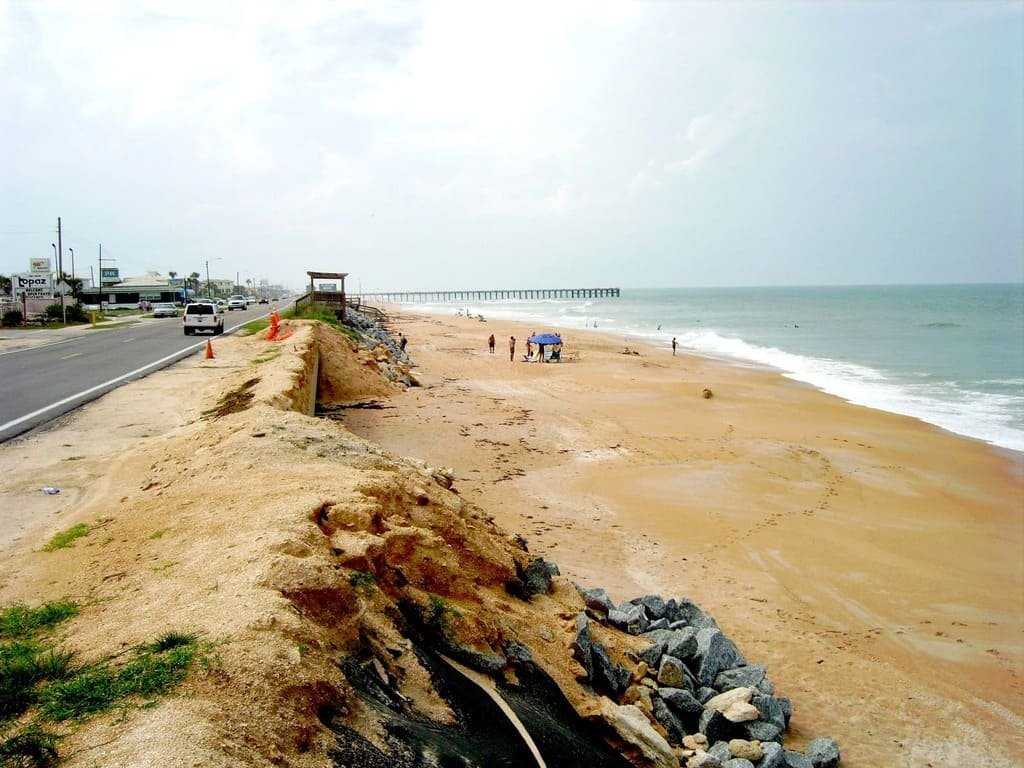
The final stretch runs through Flagler County, passing small beach communities before ending at Gamble Rogers Memorial State Recreation Area, a state park with camping and beach access named for a Florida folk musician. Flagler Beach itself has a walkable oceanfront strip with a fishing pier, marking the byway’s southern terminus.
Use the trip planner to build a day-by-day itinerary based on your available time and starting point.